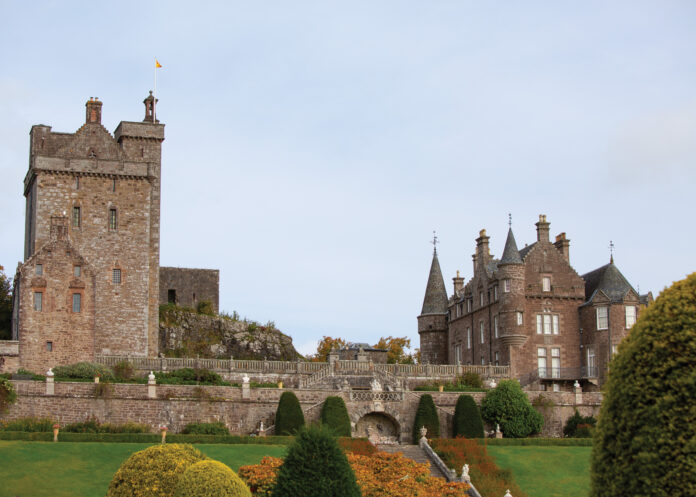
Like an aged guardian, the weathered stone façade of Drummond Castle carefully watches over its formal gardens from above. These Renaissance-style terraces have surrounded the storied structure for centuries, beckoning admirers to come and behold their horticultural artistry—from the parterres’ patterned grandeur to the fair petals of a single rose.
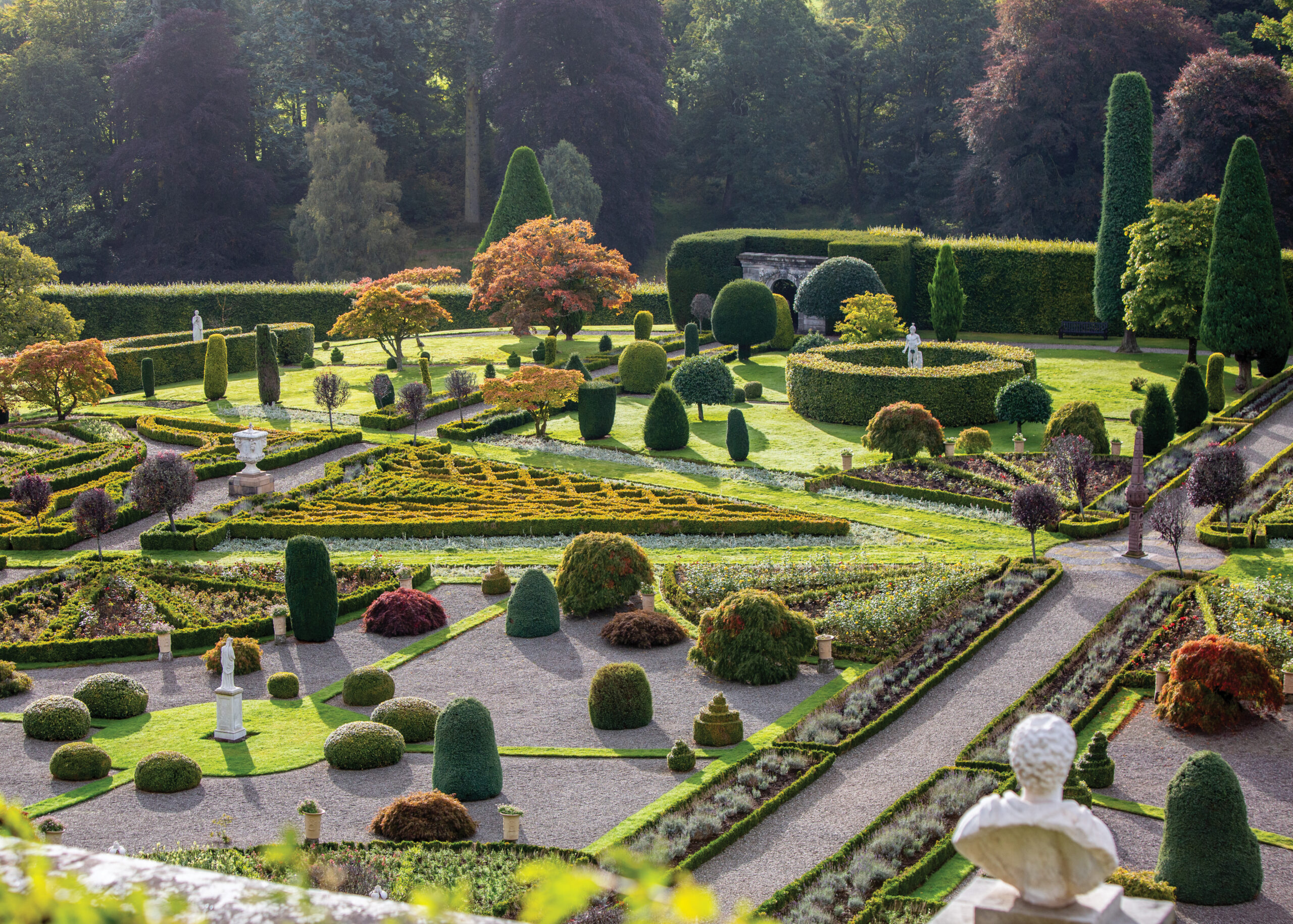
In recognition for outstanding valor, Sir Malcolm Drummond was awarded an impressive tract of land, which stretches across Perthshire’s Gask Ridge—where Roman signal towers and fortifications once stood—before melting into the fertile vale below. Located just a stone’s throw from Scotland’s market town of Crieff, this plot holds the history of subsequent generations of this illustrious family. The first Drummond Castle was built around 1490, but a seventeenth-century extension, along with an eighteenth-century remodel by noted architect George Turnbull Ewing, greatly changed the stone structure’s appearance. And while this venerable edifice, incorporating its ancient tower and gatehouse, is impressive to be sure, it is the magnificent gardens to the south of the castle that draw the highest praise.
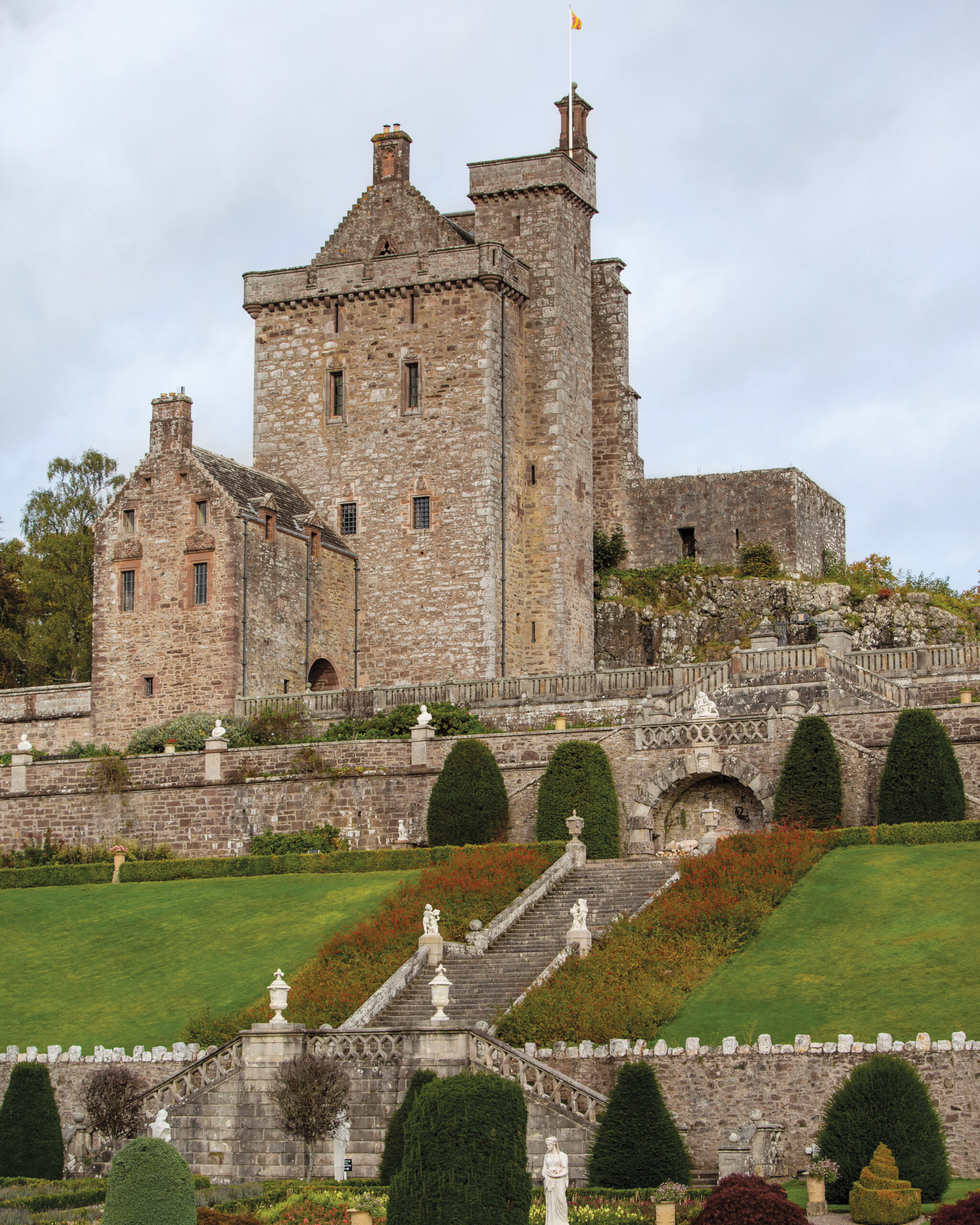
Though this horticultural masterpiece traces its genesis to 1490, the gardens of today have far exceeded even the loftiest dreams of early planters. The 2nd Earl of Drummond, a Privy Counsellor to both King James VI and King Charles I, is attributed with the most noted transformation, which took place between 1630 and 1636. Later, when many eighteenth-century landscapers bowed to the fashion of the day, the castle gardeners managed to sidestep the trend of replacing formal gardens with great sweeps of parkland, choosing instead to maintain Drummond’s classic style.
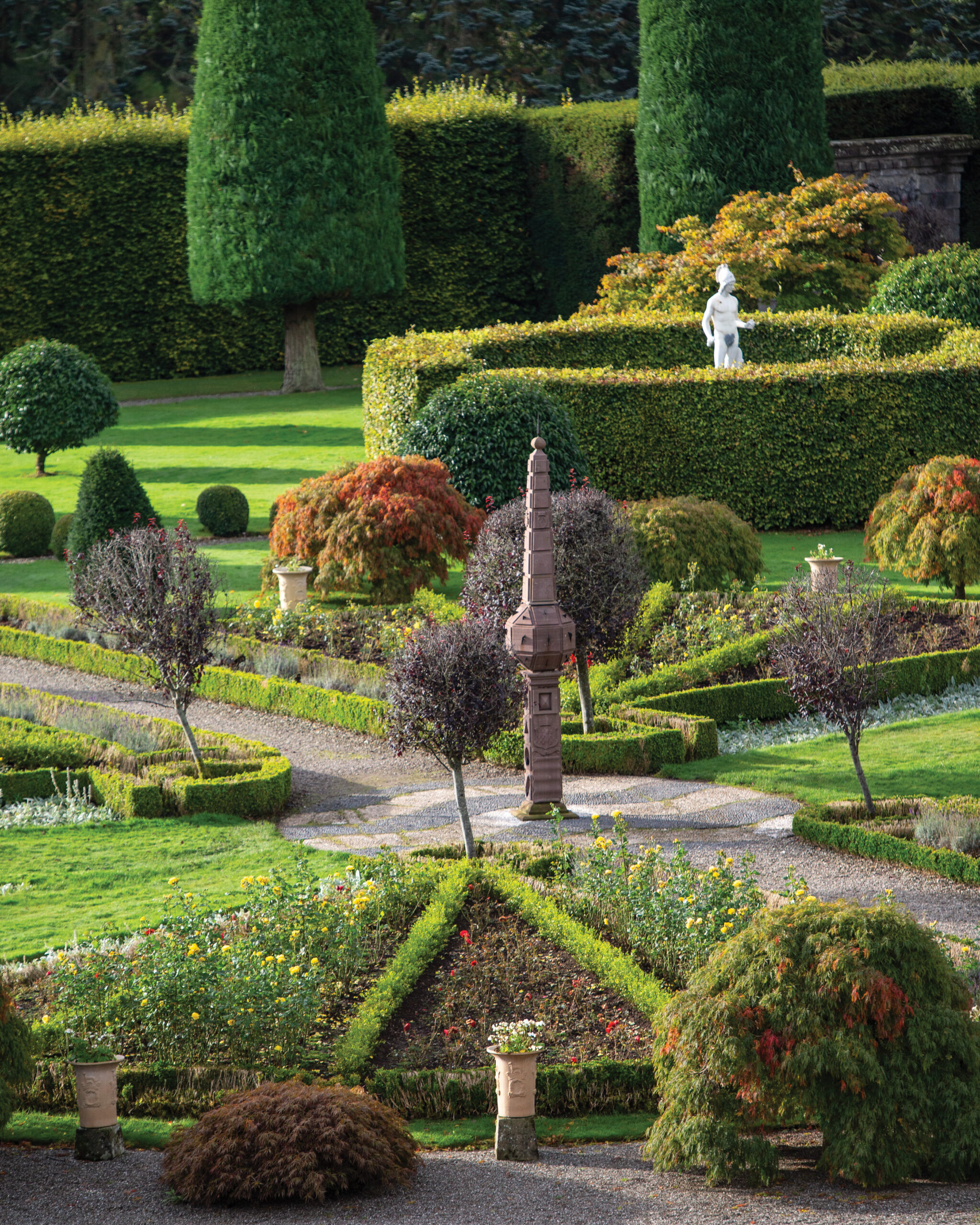
When Clementina Drummond and her husband, Peter Robert Willoughby, assumed ownership of the castle in the early nineteenth century, the couple commissioned a remarkable rejuvenation of the grounds, guided by Lewis Kennedy, who was formerly employed by Empress Josephine at her Malmaison residence in France. The Renaissance-style garden is laid out in a parterre design, comprising formal terraces and brimming with classic statuary and fountains. The inner section forms a St. Andrews Cross, where ‘Top Rose’ and ‘Evelyn Fison’ roses represent the yellow and red hues of the Drummond heraldic colors. At the center stands a sundial—the work of seventeenth-century master mason John Mylne—which displays the time of day in various world capitals.
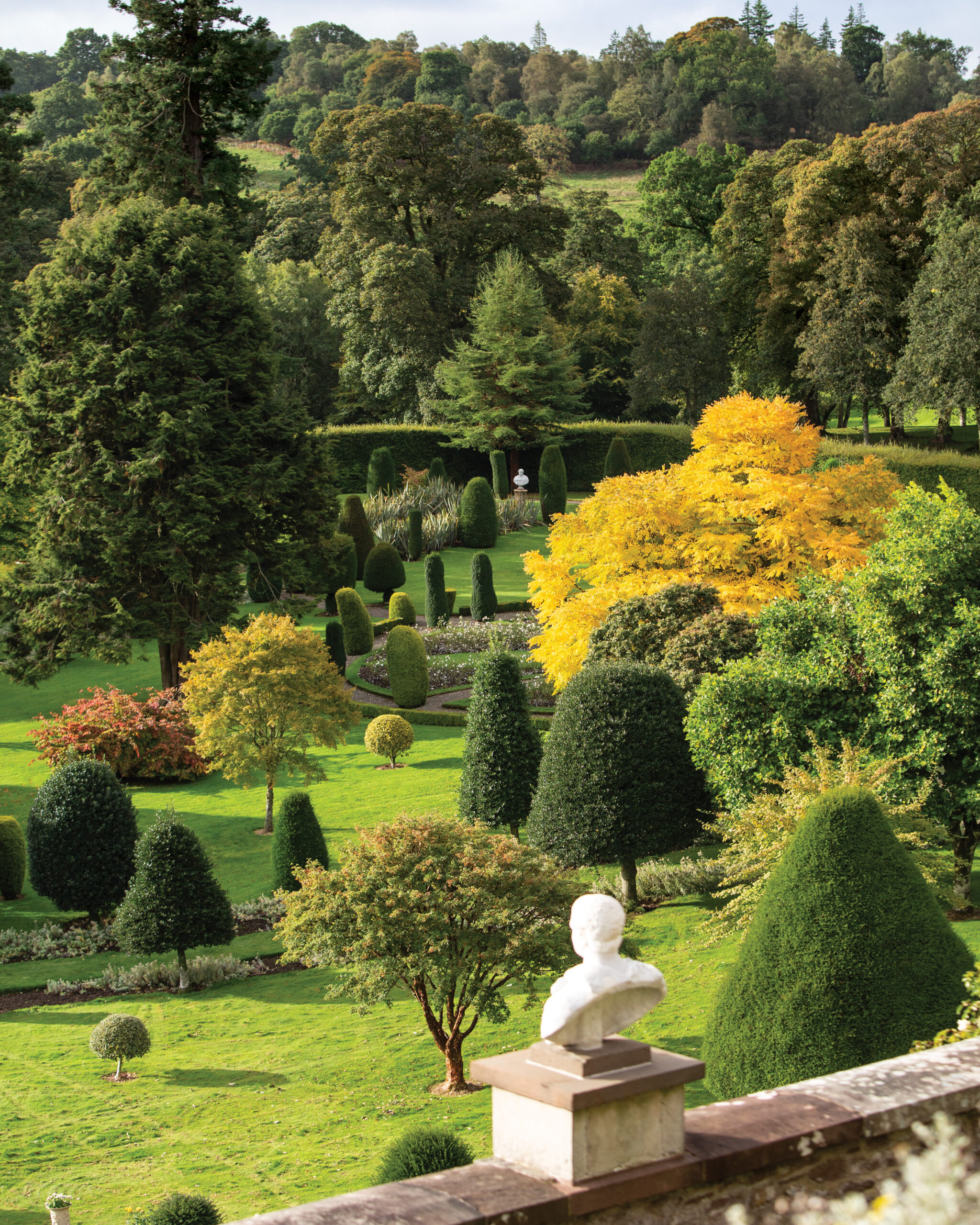
Because the precisely clipped hedges alone offer a pleasing visage any time of year, a visit to Drummond Castle Gardens is an enjoyable experience in all seasons. But a stroll amid the pathways when the fragrance of lavender and roses scents the air is certain to create the loveliest of memories.
Text Karen Callaway and Leslie Bennett Smith
Photography Stephanie Welbourne Steele/ Styling Melissa Sturdivant Smith
Discover more inspiring travel destinations with a Victoria magazine subscription.