Address Pressing Matters
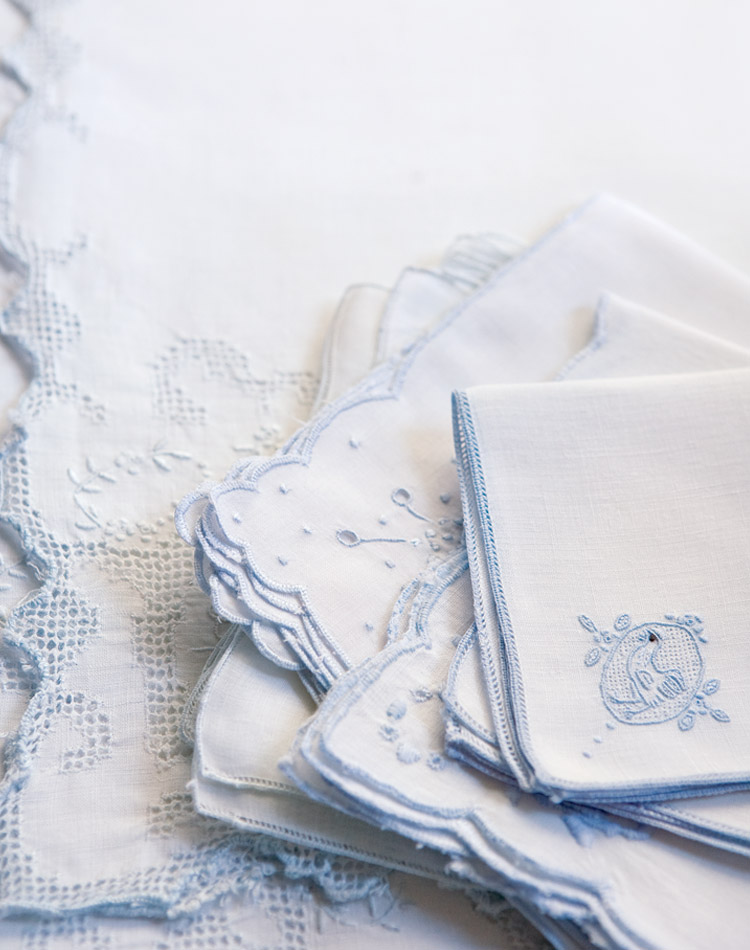
Crisp linens create a polished look, but caution should be taken when using heat. Place a terry-cloth towel over the ironing board, and smooth damp textiles with a dry handheld iron. Delicate items should be sandwiched between the towel and a press cloth. If you are unsure how a fabric will react, begin on the lowest setting, and test a small, inconspicuous area before increasing the temperature. Instead of using steam from the appliance, which can leave unexpected rust spots, spritz as necessary with a spray bottle of distilled water. Iron embroidery on the wrong side to protect the needlework and to display the design to its best effect. Most experts do not advise the addition of starch—or they suggest starching immediately prior to use and laundering soon afterward—as the carbohydrate can cause linens to yellow and may attract pests over time.
Give Linens a Soft Place to Land
A spirit of preservation yields thoughtful storage solutions. Plastic bins do not allow air to circulate, so choose wire or painted wood shelving lined with acid-free paper or cotton fabric. Rolling is easier on fibers than folding, so consider wrapping a set of napkins or tea towels around a cardboard tube covered with acid-free paper. A bundle of chalk tied with ribbon and hung in the closet draws moisture away, and sprigs of lavender tucked into a drawer or placed nearby provide subtle fragrance.
To learn more about caring for your fine linens, purchase the Linens, Lace & Monograms 2017 issue of Victoria on newsstands or online.