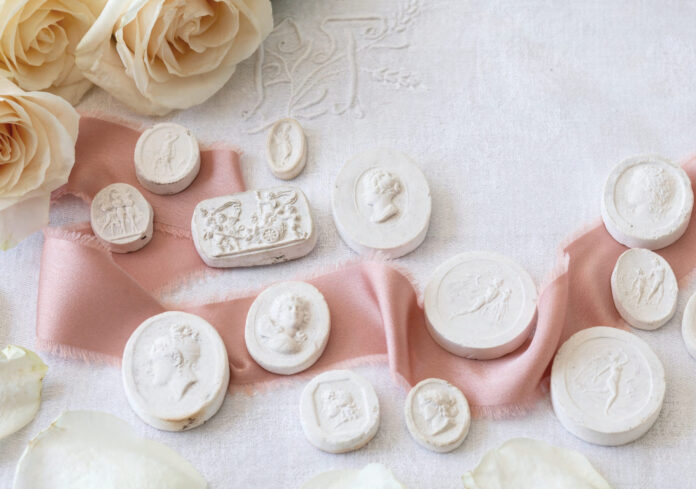
A timeless treasure loved for its ability to add simple, storied charm to any interior regardless of color scheme, the plaster intaglio boasts a fascinating history. The tale begins with ancient civilizations, continues with Roman rings, and culminates in an educational expedition of European culture.
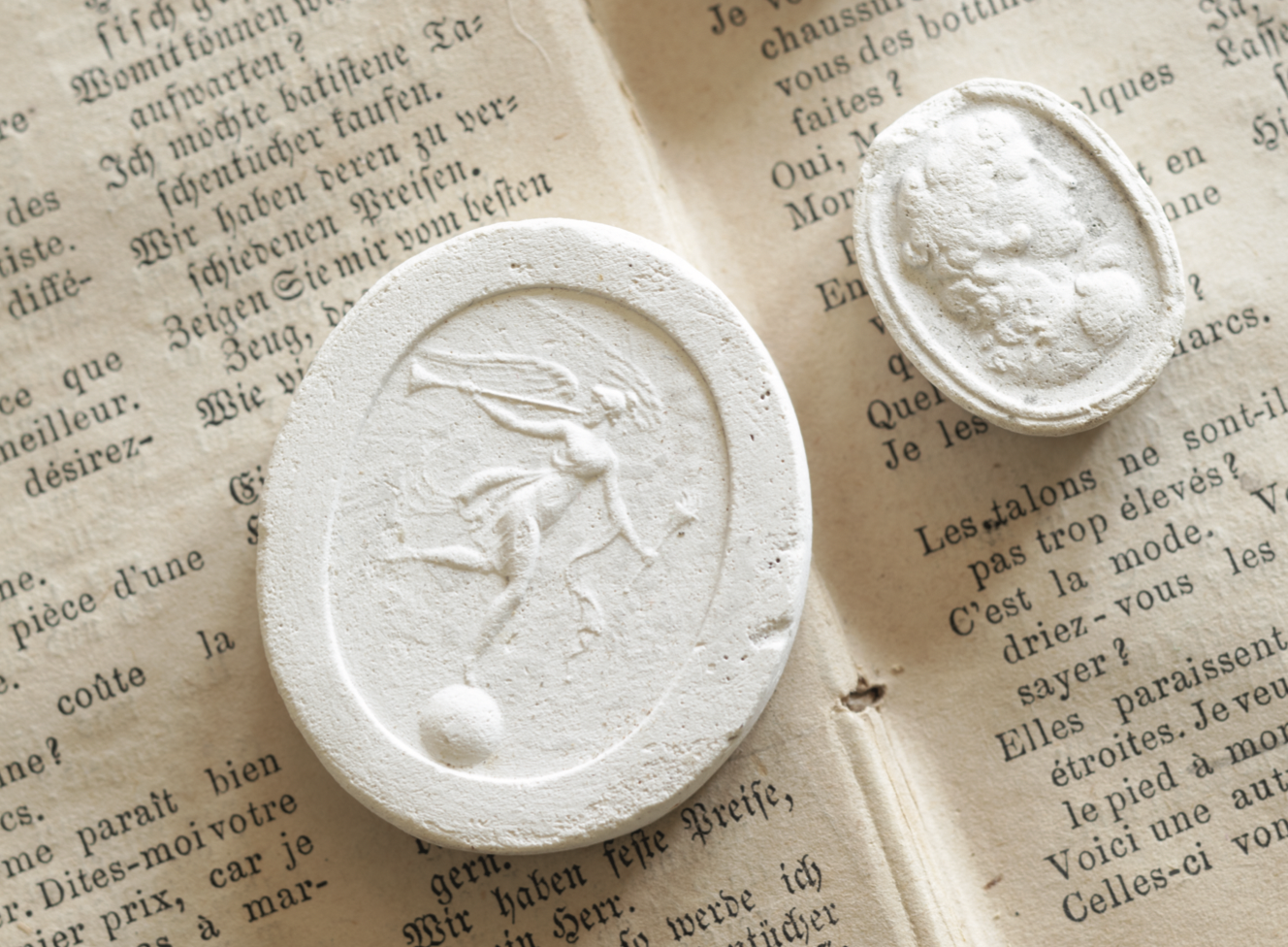
From the seventeenth to early nineteenth centuries, it was traditional for young European gentlemen of wealth and status to culminate their schooling in a rite of passage known as the grand tour. This custom, valued for giving exposure to the cultural legacy of various destinations, also offered the opportunity to acquire tokens otherwise unavailable—souvenirs, of sorts—that lent prestige to the traveler.
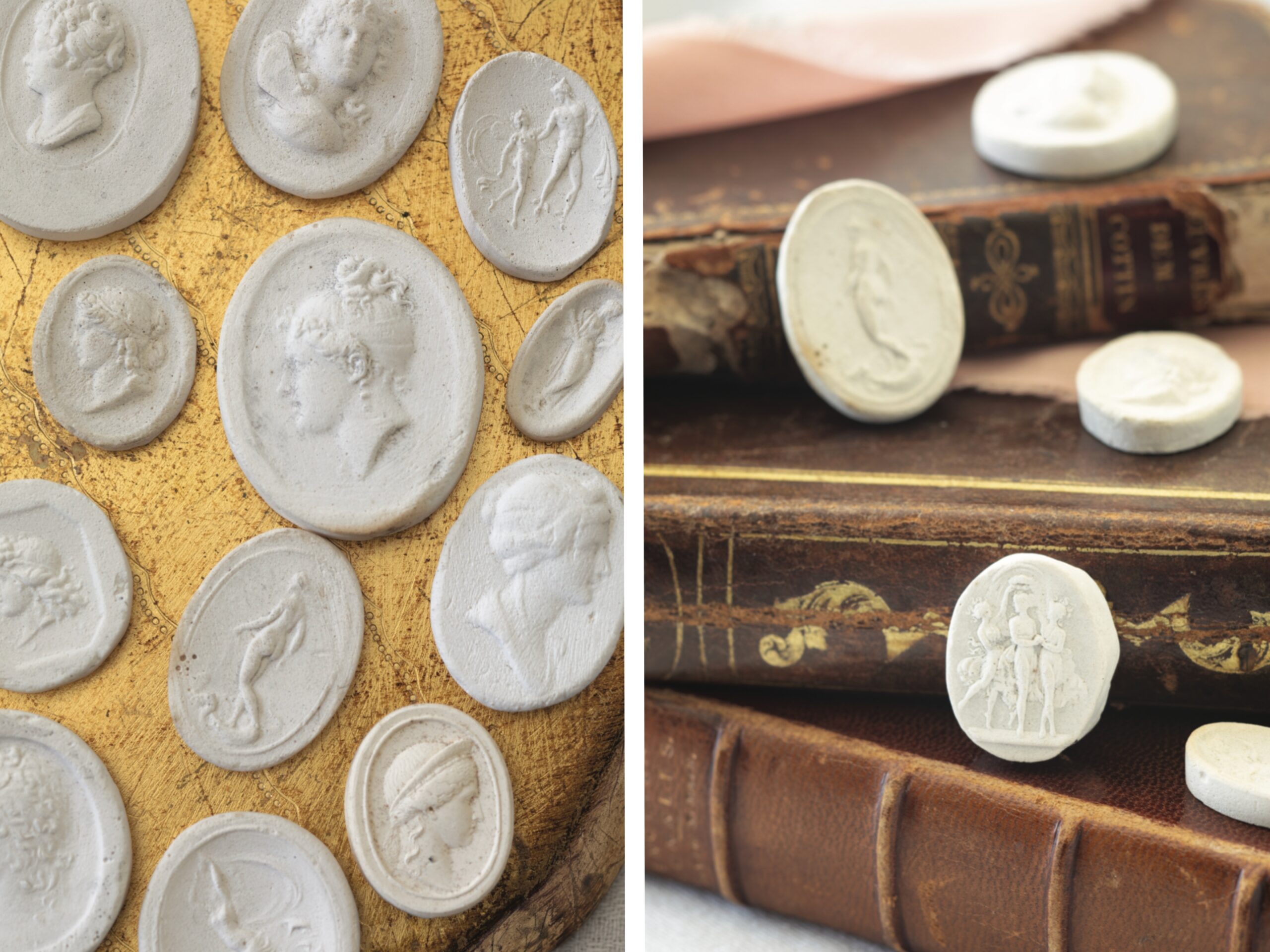 Upon his return home, a grand tourist would often carry crates full of literature, artwork, and other artifacts to later display as emblems of his standing as a well-traveled, educated young man. Among the treasures in his trunks, one could likely find a small collection of plaster intaglios.
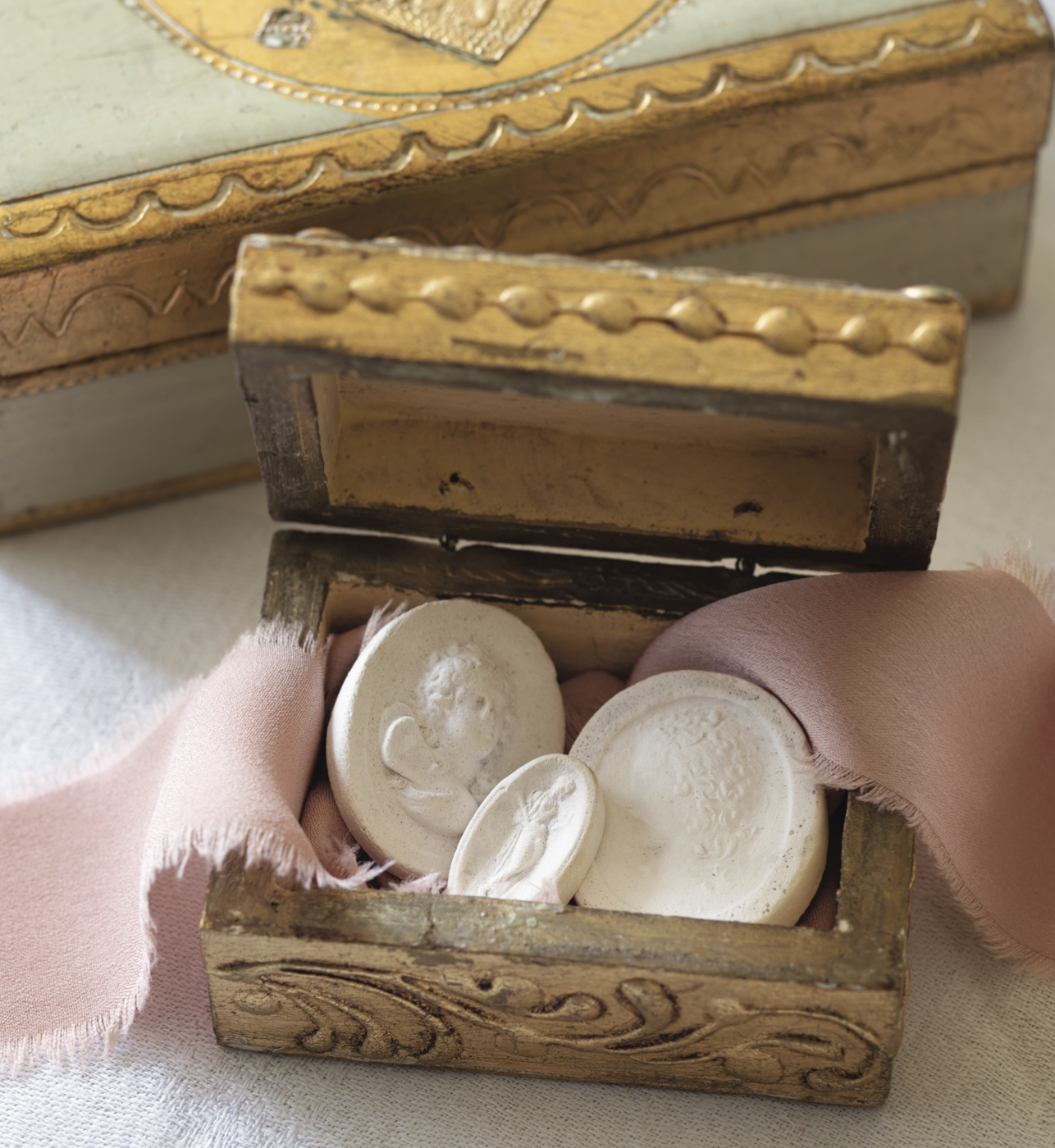 Derived from the Italian word for carving, the term “intaglio” refers to an art form marked by intricate craftsmanship and millennia of history. Since at least the fourteenth century BCE, ancient artisans created these relics by chiseling into a hard material such as stone, glass, or metal. In the Roman era, men of standing commonly used engraved gemstone rings to make wax seals, while later cultures cast bronze copies of such jewels.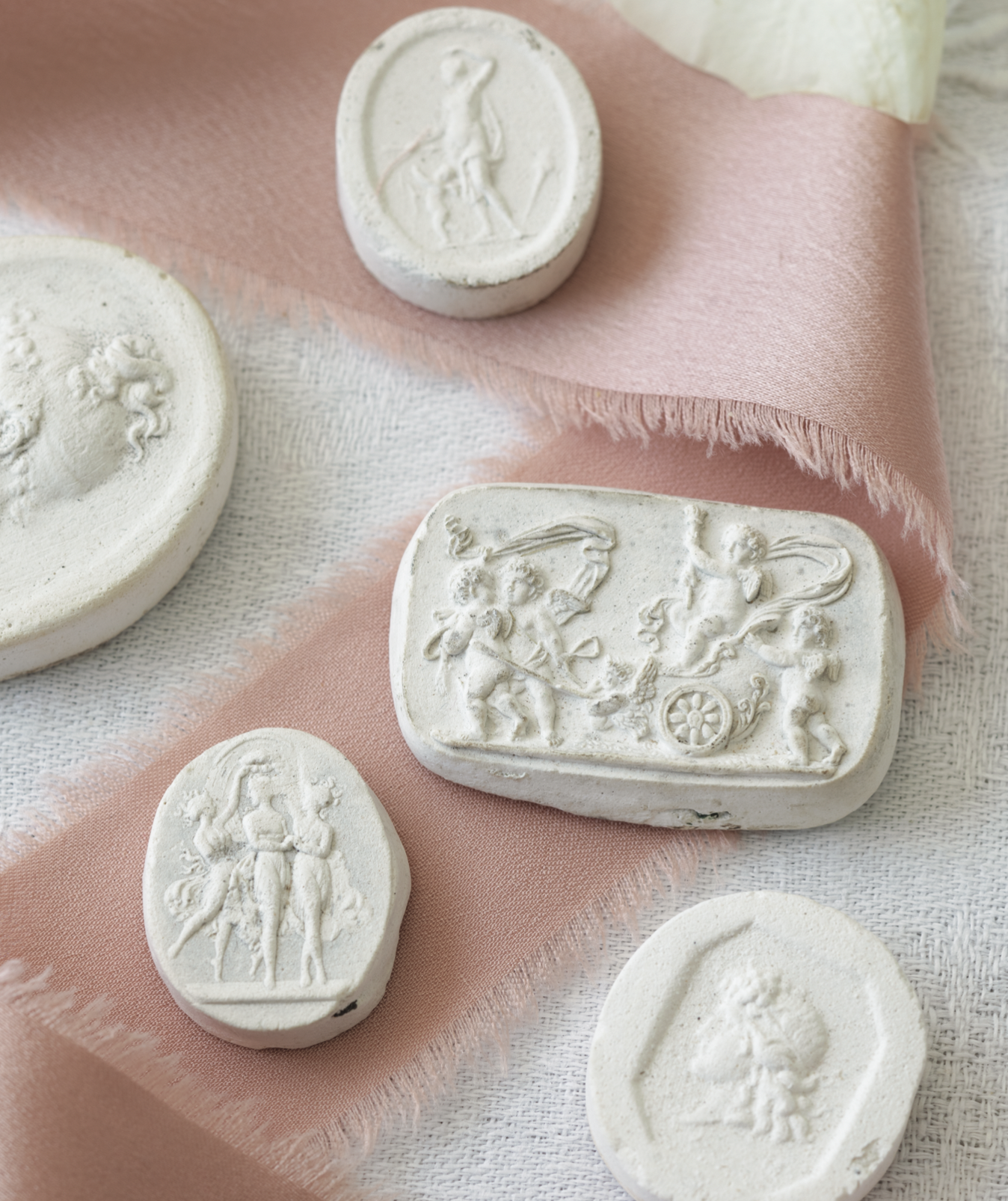
By the mid-eighteenth century, most people amassed plaster castings made from the bronze versions, as they were comparatively fast and easy to manufacture. Stops along the grand tour would often sell these alabaster curios as mementos for sojourners to carry home.
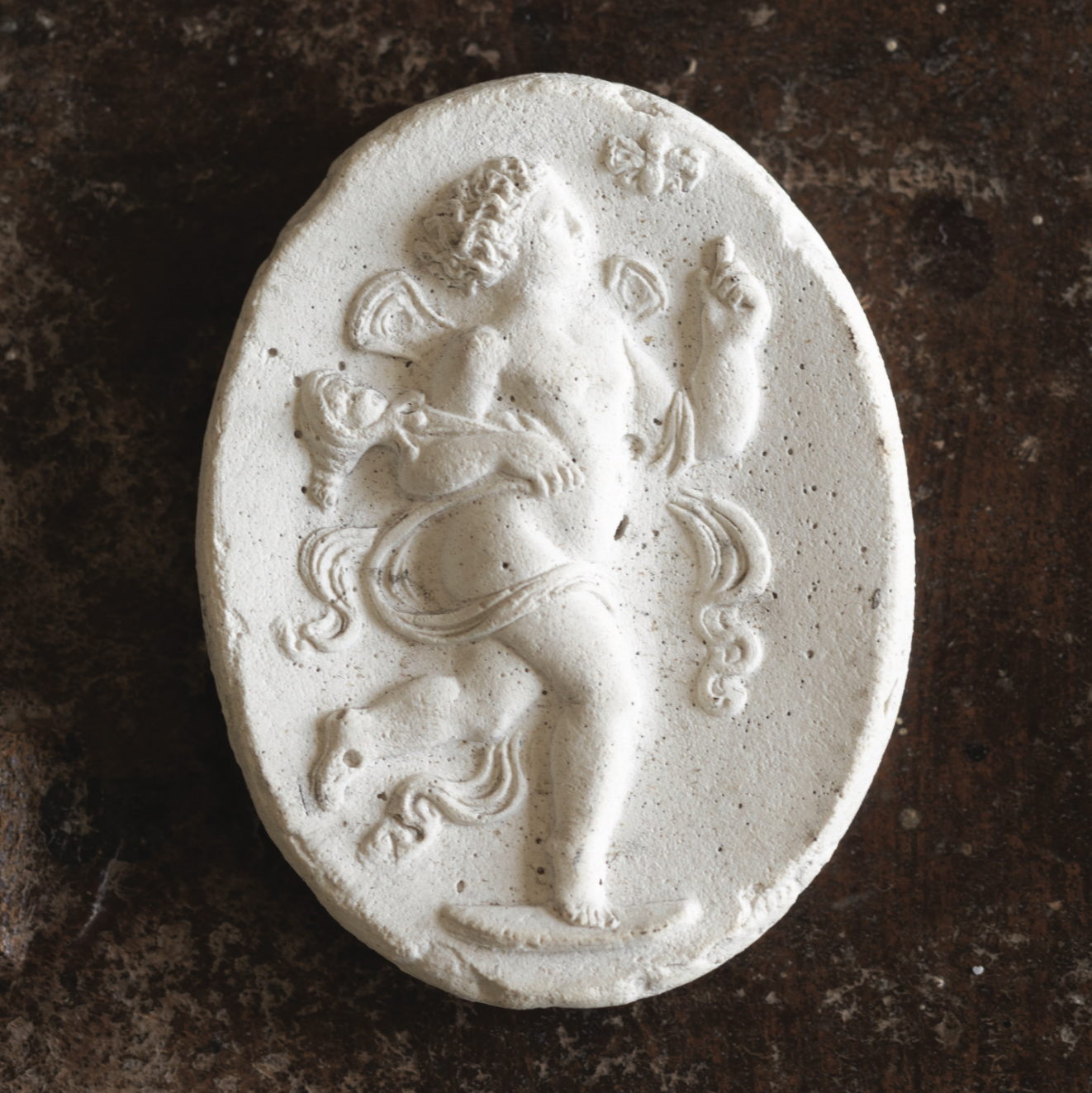
Today, collectors treasure these plaster adaptations widely. They may not sparkle like the gemstone or brass that can still be found at antiques stores, but when placed upon a mat in a frame, intaglios grace the home with an ageless beauty that tells of cultures and journeys from long ago.
Discover more charming collectibles and their storied pasts with a Victoria magazine subscription.