Constructed at the height of the Gilded Age, Biltmore represents one of the greatest undertakings in the history of American architecture. George W. Vanderbilt, the third son of railroad magnate William Henry Vanderbilt, visited North Carolina frequently with his mother during the 1880s. Smitten with Asheville’s majestic scenery and temperate climate, the wealthy heir purchased 125,000 acres and commissioned famed New York City architect Richard Morris Hunt to build a “little mountain escape.” Hunt designed the opulent summer home in the style of working estates in Europe.
Inspired by France’s Les Châteaux de la Loire, Biltmore is the largest private residence in the United States. The sprawling 4-acre, 250-room mansion took more than six years to complete.
Both the interior and the exterior bear the fingerprints of George and his wife, Edith Stuyvesant Dresser. The couple’s refinement, gained through international travel, educational pursuits, and cultural enrichment, is reflected in the opulence of the residence.
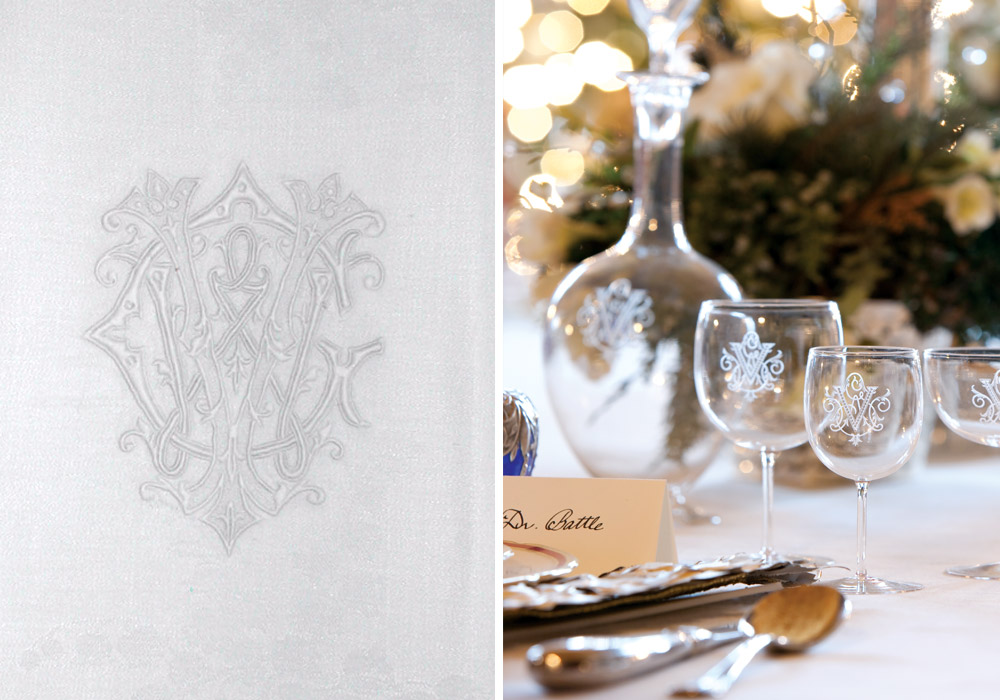
In affluent society of the day, it was customary to have items personalized. George and Edith embraced this tradition wholeheartedly, adding their monogram to china, crystal, silverware, serving pieces, tablecloths, napkins, toiletries, and bedding. Even the servants’ livery bore the familial mark.