Built by German-Jewish immigrant and cotton mogul Samuel Hermann in 1831 during the prosperous Golden Age of New Orleans, the Hermann-Grima House is one of the city’s most storied residences.

Through archaeological studies and careful research, the house was restored to accurately portray the lifestyles of the nineteenth-century Creole families who dwelled within.
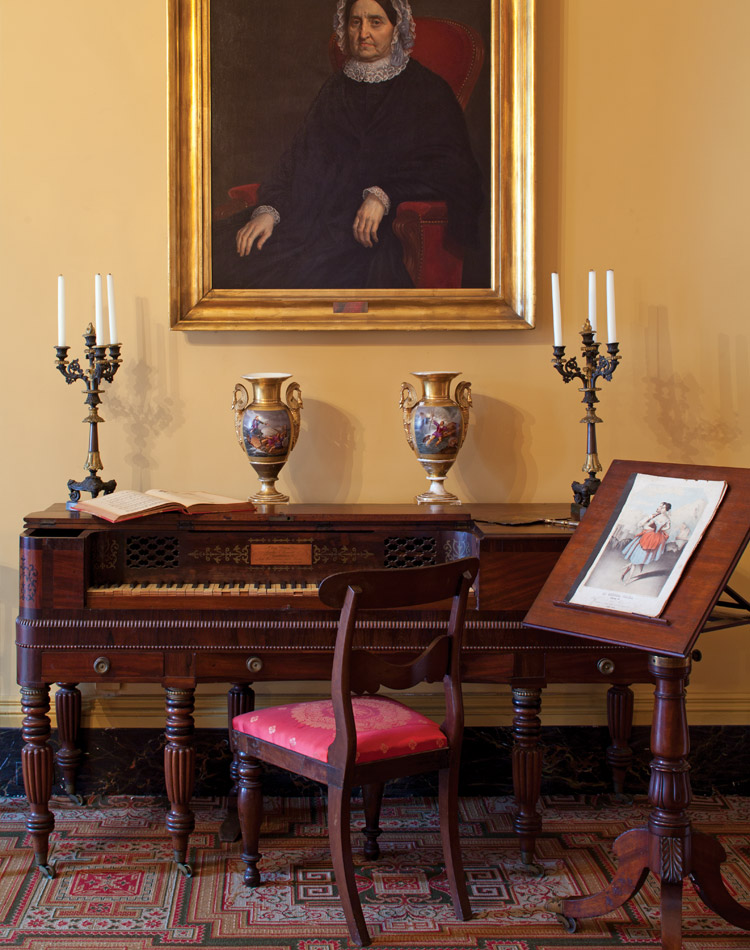
Above: A pair of porcelain urns, flanked by gilded bronze candelabra, has managed to remain intact through the centuries.

Assembled on-site during the nineteenth century, a regal mahogany dining room table (above left) purchased from a furniture broker in New Orleans continues to display a pair of etched-glass hurricane shades the Grima family once used. Pictured above right is a cherished piece of fine heirloom china.
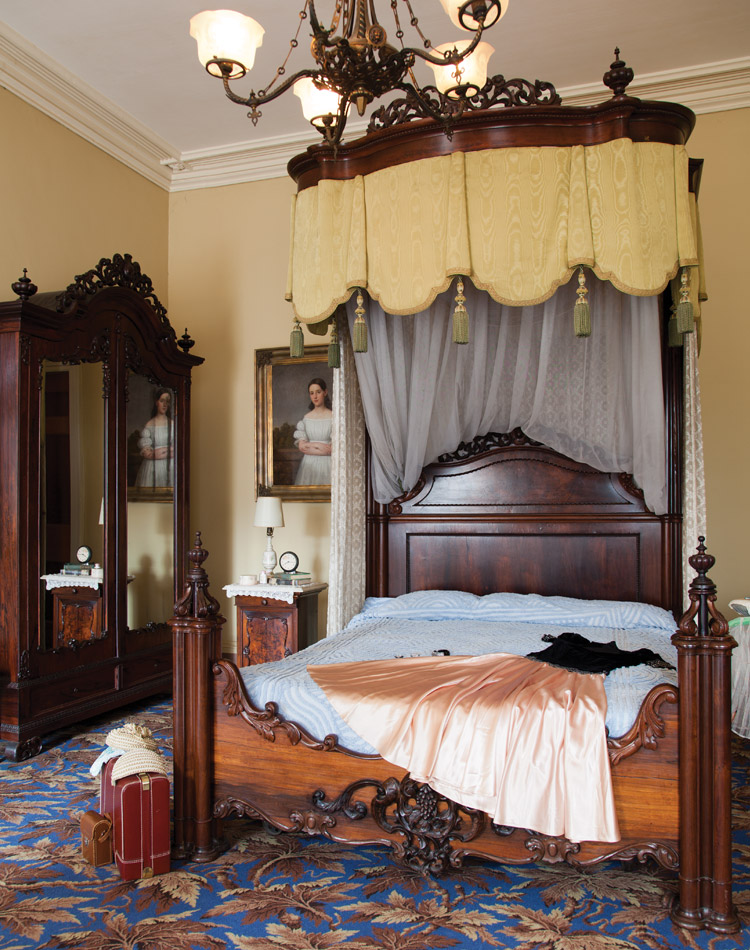
This elaborate bedroom display, above, was designed to replicate one of the first boardinghouse rooms. Impeccably handcrafted furniture pieces include an 1880 mahogany half-tester canopy bed accented with intricate hand-carved embellishments, as well as a mirrored mahogany armoire. Both pieces were preserved and belonged to the original homeowners.
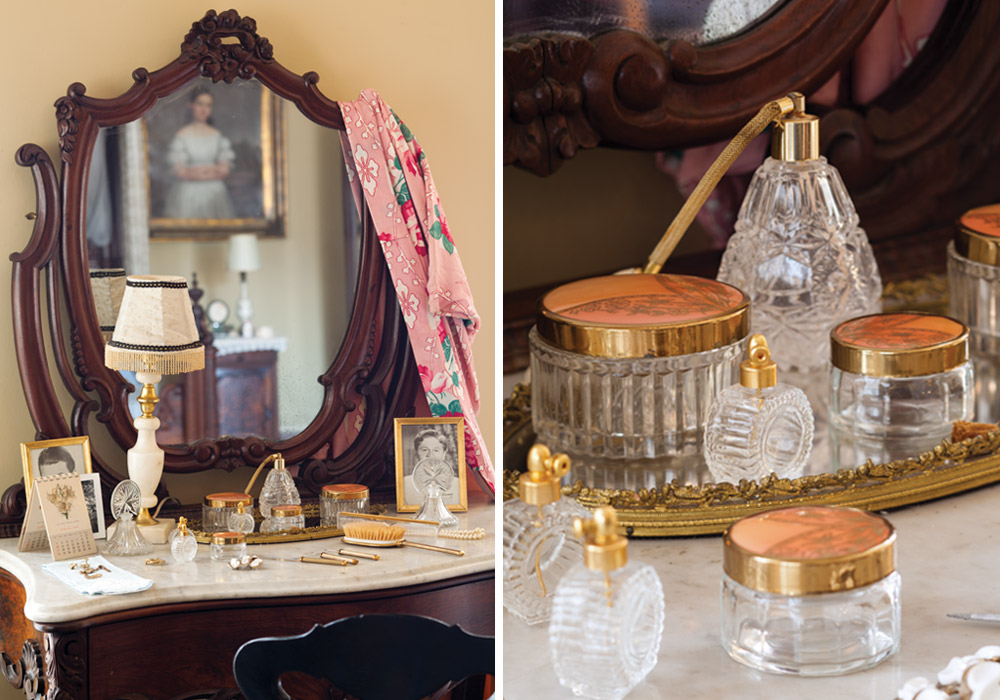
The lovely dressing table accessories, pictured above left and right, were intentionally placed to reinterpret the circa-1940s boardinghouse rooms that provided shelter for women of the era seeking independent lifestyles. The personal items, which were generously lent to the Hermann-Grima House, once belonged to the mothers and grandmothers of The Women’s Exchange board members. The marble-topped dressing table and mirror were owned by the Grima family.
Photography Marcy Black Simpson
To discover more Crescent City splendor, see “Golden-Age Grandeur” on page 57 of the July/August 2013 issue of Victoria.