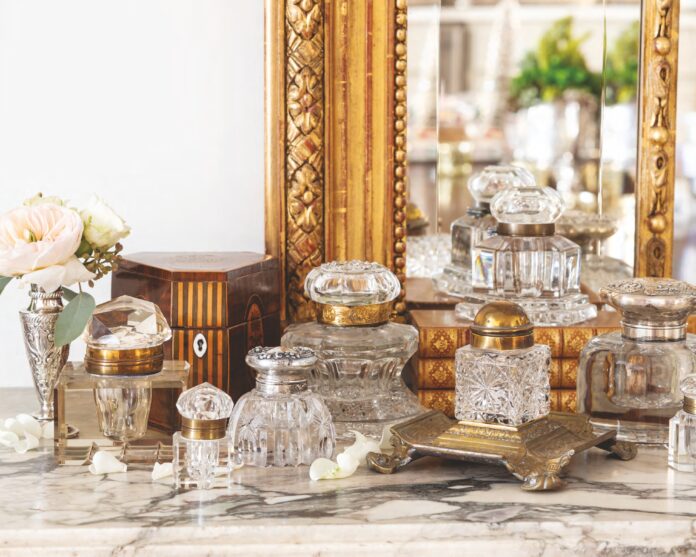
Glistening upon the table like icicles dangling from eaves, inkwells carry not only an imaginative mystery about their past—such as what sentiments may have been written through their use—but also a captivating beauty in their present. These crystal capsules add doubtless charm to any corner of the home.
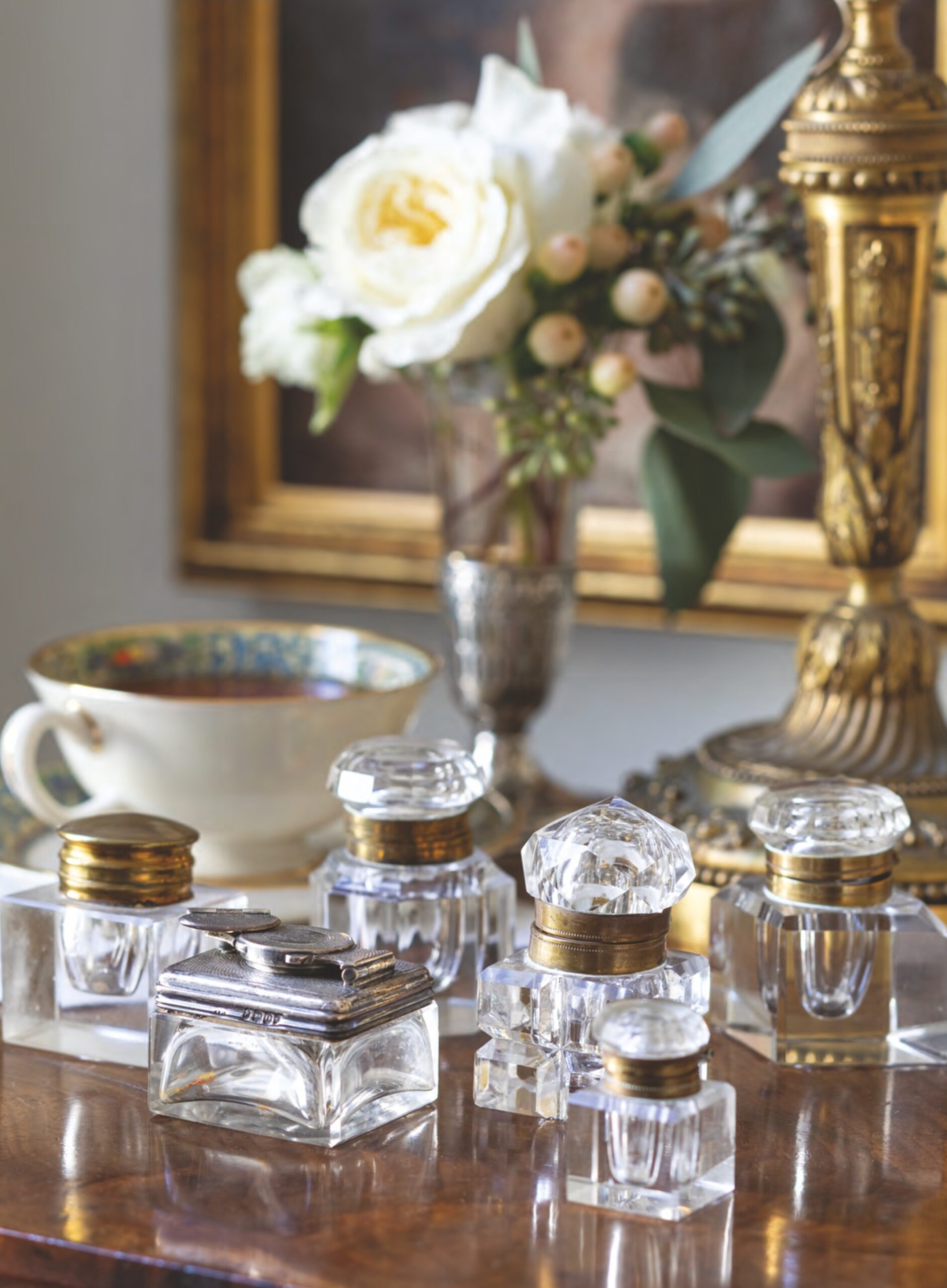
The concept of an inkwell is simple, derived from necessity alone: Without the convenience of the modern pen and pencil, writers of the day required someplace to store and access their ink. Because of this practical nature, the inkwell’s design was not always pleasing to the eye. Ancient Egyptians utilized natural hollows in stone, Romans fashioned uncomplicated vessels from copper, clay, or glass, and Middle Age monastic scribes may have even worked with animal horns.
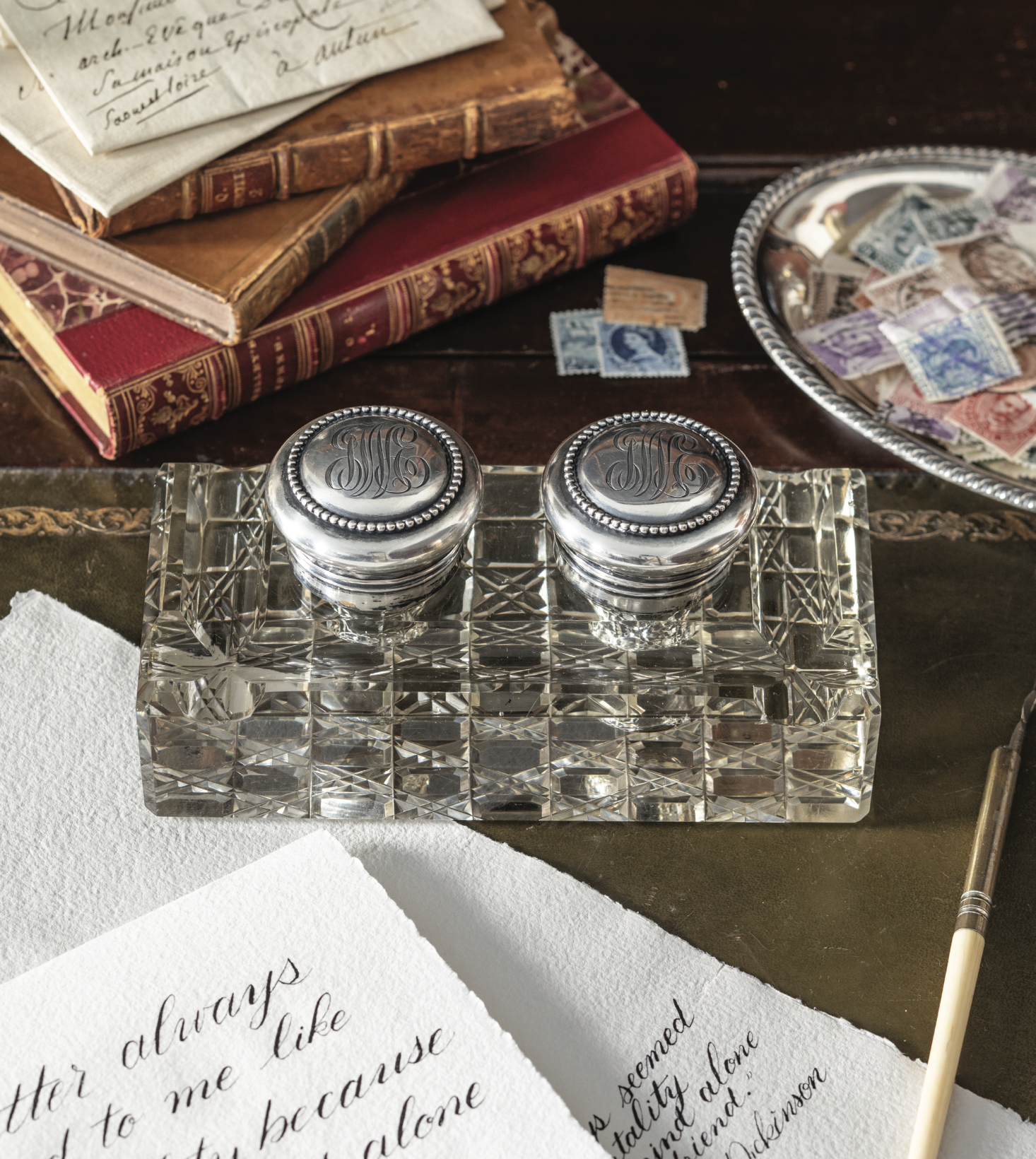
Still, beauty eventually took a firm hold of these diminutive chambers. Artistic design was often used to emphasize the noble status of those who were fortunate enough to be trained in the art of letters. But as literacy spread, so, too, did the inkwell’s prevalence upon the desks of everyday wordsmiths.
Eras such as the Renaissance and Victorian periods boast inkwells of incredibly fetching composition—versions affixed with precious metals or sculpted into detailed figures and ornate patterns. Some even came as part of an inkstand or lap desk, perhaps with coordinating wax seals, quills, or dip pens.
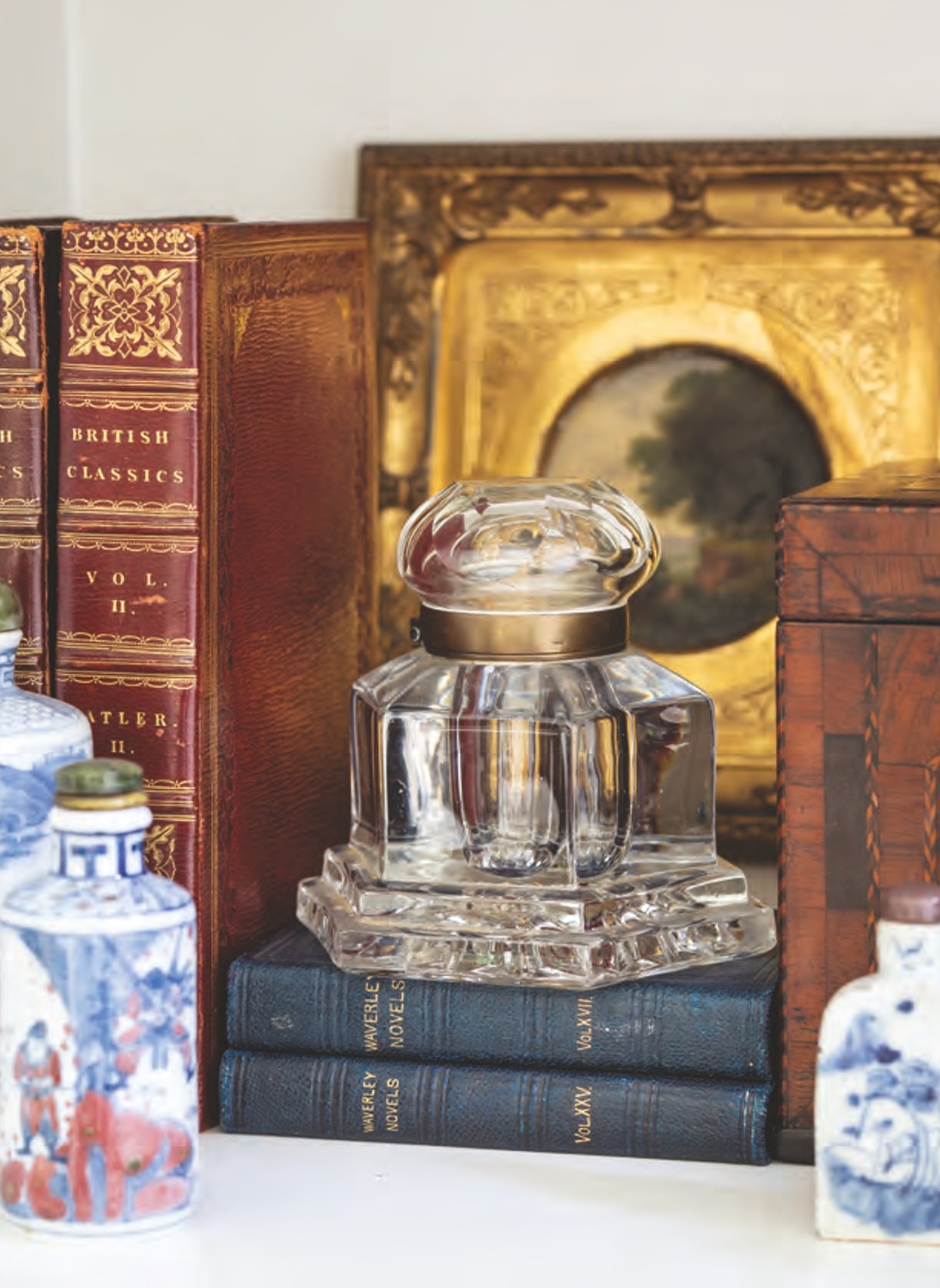
With the invention of the fountain pen in the 1800s, the necessity—and therefore popularity—of inkwells began to dwindle. Even though they are rarely used for their intended practical reasons in the modern day, these Lilliputian cauldrons of creativity are still sought out by impassioned collectors around the world.
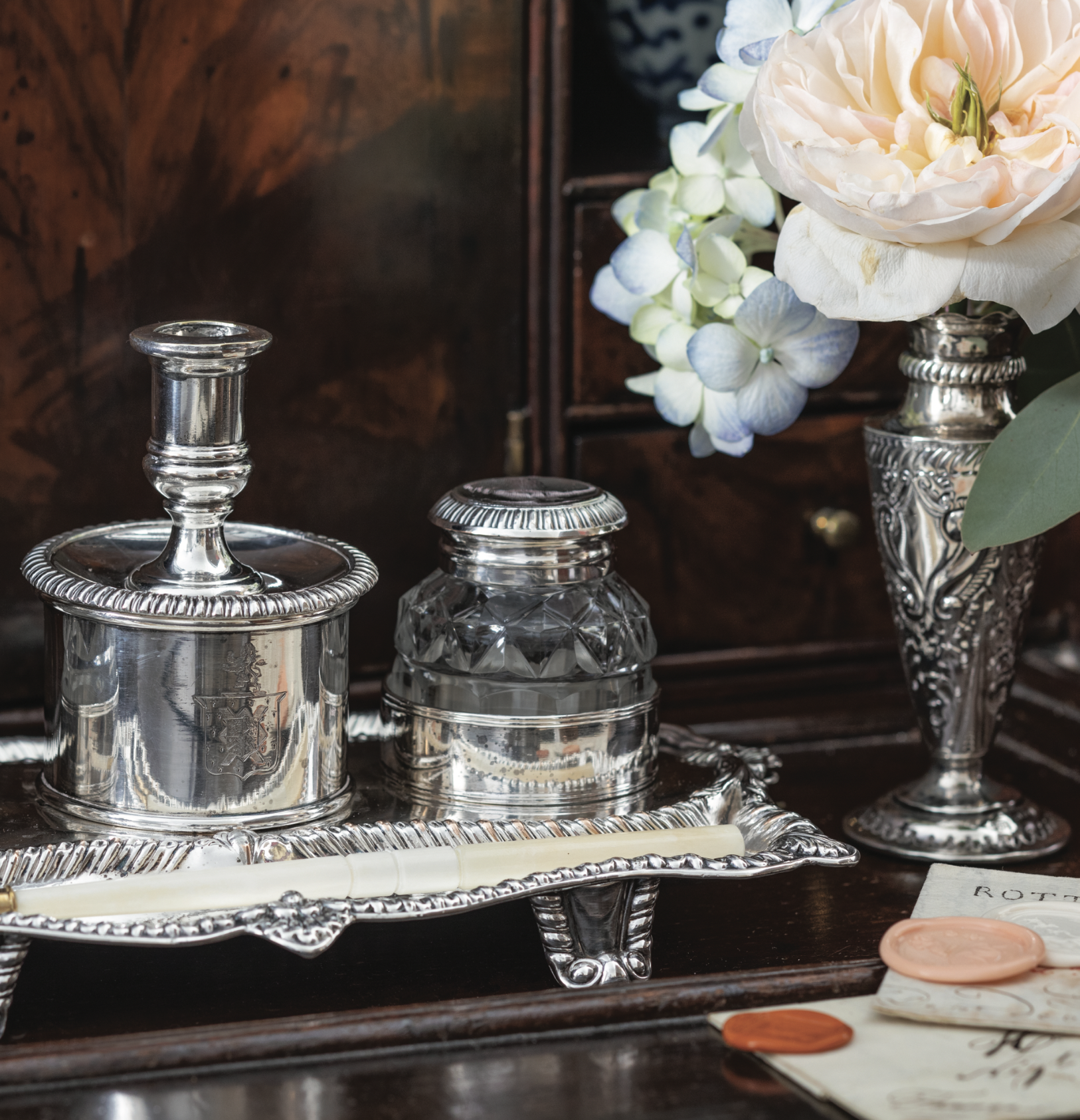
The owner of this private collection pursues largely glass and crystal varieties, primarily of English origin, and prides himself on acquiring a medley of different shapes and sizes. When the utility has faded, it is the ornamental that remains.
Text Leslie Bennett Smith
Photography Stephanie Welbourne Steele
Discover more delightful collectibles and inspiring vignettes with a subscription to Victoria magazine, available in print and digital editions.