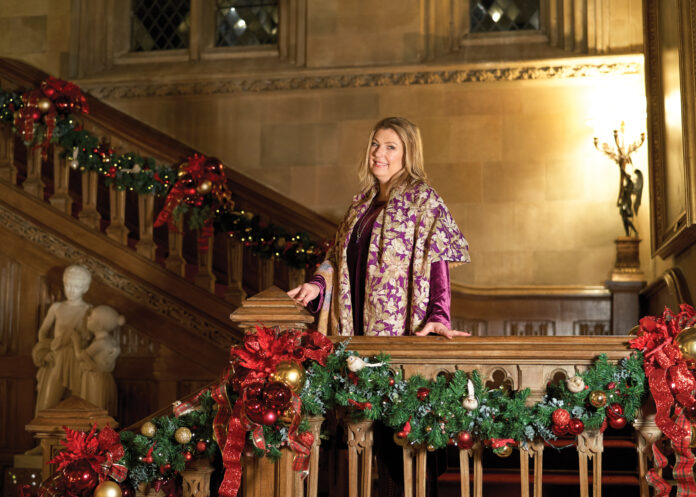
From the end of November, we lay out a selection of events to entertain visitors to Highlclere Castle during Yuletide. These range from guided tours and afternoon teas to evening receptions, a weekend full of carol singers, conversations with me, a tea with Father Christmas and Friends of Highclere, and, finally, a performance of A Christmas Carol in the Saloon, lit by the lights on the Christmas tree. This production offers a magical way to close the real Downton Abbey’s public events, and we usually declare Christmas “a wrap” on December 19.
 Ironically, this was the very day A Christmas Carol was published in 1843. Charles Dickens was only 31 years old, and his previous novel was not selling well. However, the first run of this new book sold out before Christmas, and it has never been out of print since. Dickens was himself an actor, and his stories are a performance, written for magazines in serial form. The color and immediacy of his language bring characters and situations alive like no other author.
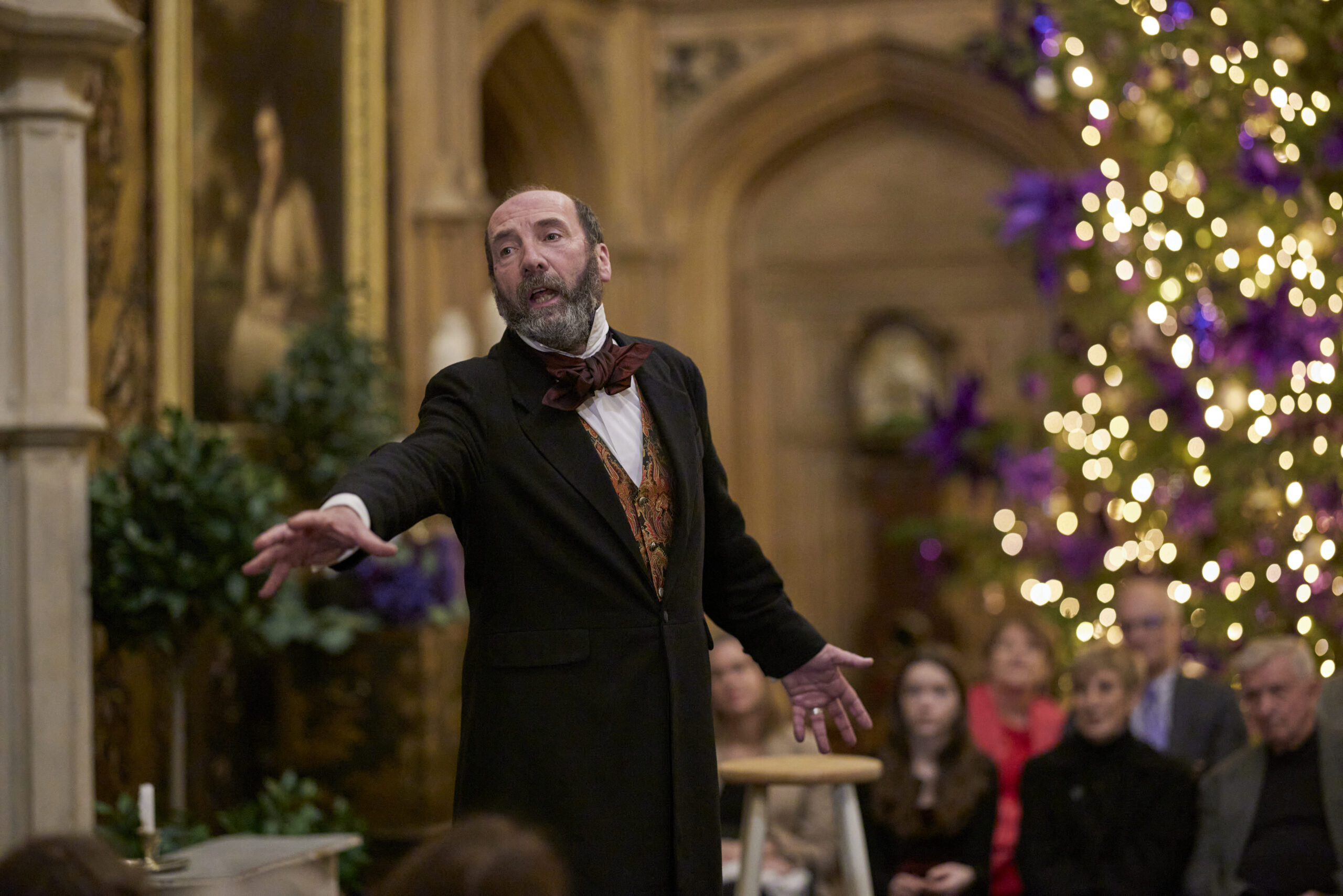 A Christmas Carol is written in three parts, or perhaps as three ghosts. The first spirit to visit the central character, Scrooge, is the “Ghost of Christmas Past.” This ghost is described in great detail, and Scrooge does his best to ignore memories the ghost insists on showing him. The second ghost is the “Ghost of Christmas Present.” Large and generous, this spirit represents our current everyday lives. He brings a feast, and his visit is much briefer. At the end, he shows Scrooge “Ignorance” and “Want.” In the final part of the story, the menacing “Ghost of Christmas Yet to Come” reveals a terrible Christmas Day in the future. Scrooge sees a vision involving the death of a much-disliked man, whose funeral is only attended by local businessmen, if they can be assured that lunch is provided. Scrooge asks the spirit to show him a single person who feels any sentiment over his death, and the final scene is of an unloved, neglected tombstone bearing Scrooge’s name. Utterly terrified, Scrooge pledges to change his ways.
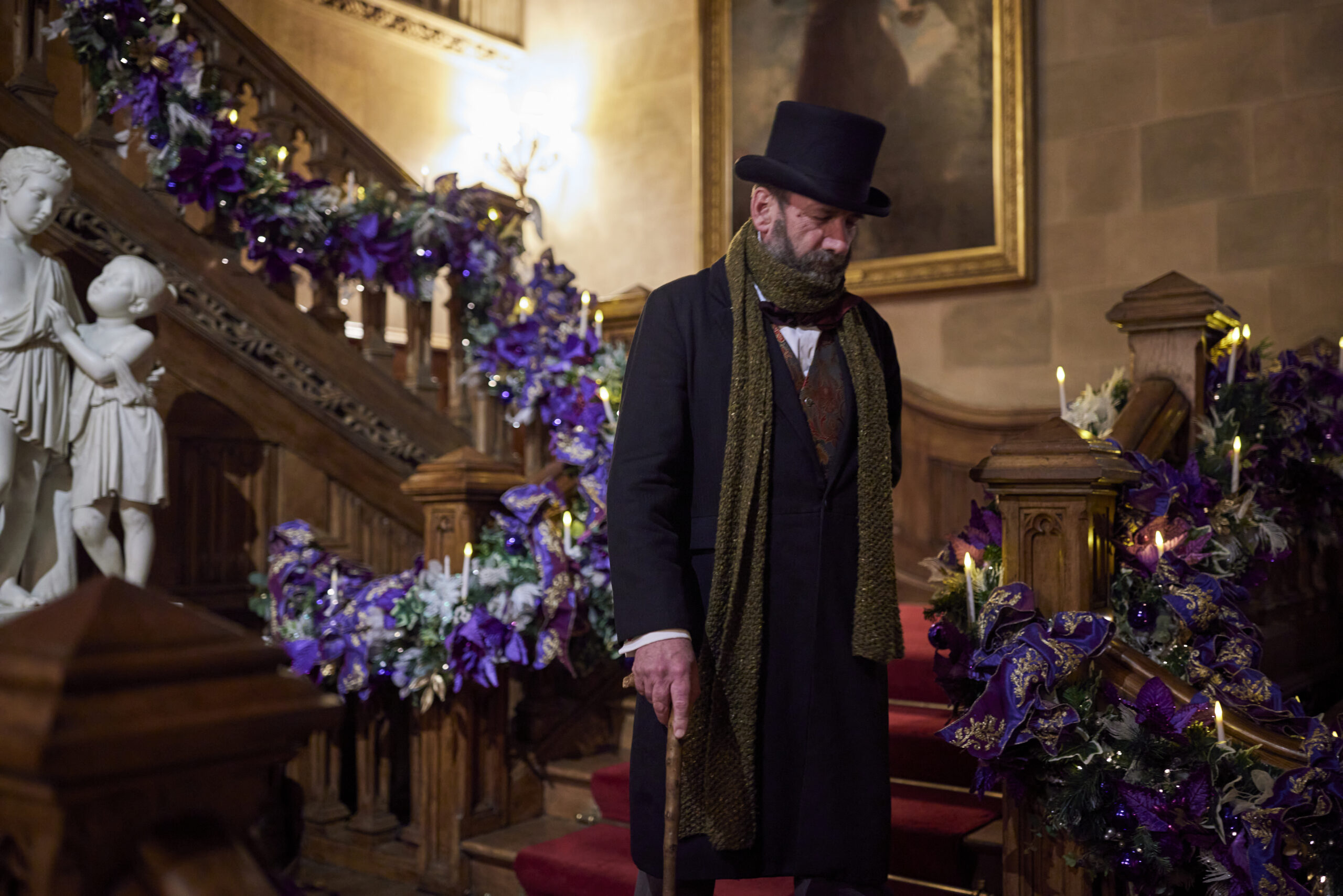
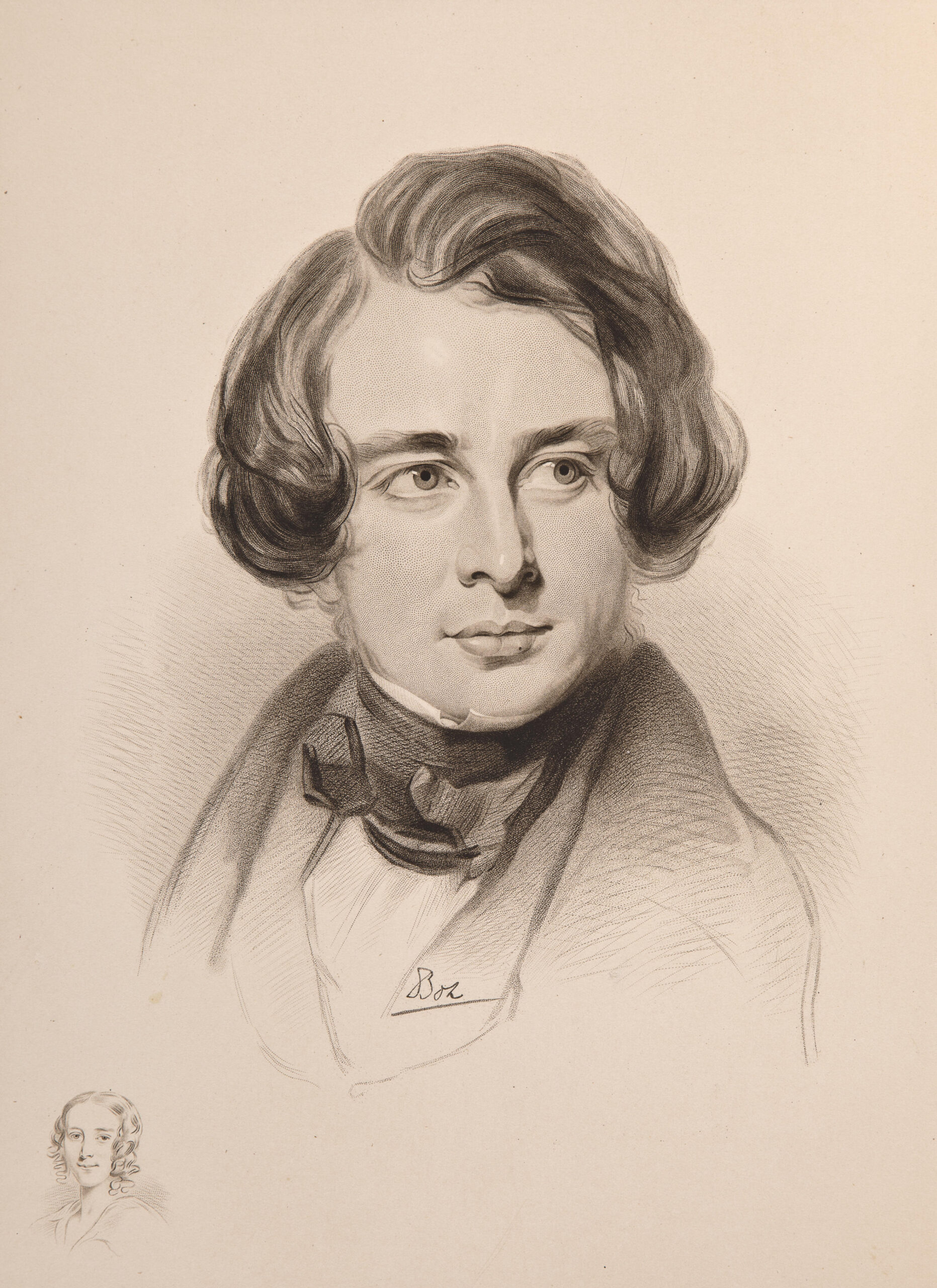 Charles Dickens has made an extraordinary contribution to our view of Christmas today. He is responsible for introducing many of us to the kindlier aspects of Christmas: thinking of others, looking after those who are less fortunate, the ideals of sharing and goodwill. He was also, by our standards, a campaigner, using words and stories to change our behaviors and prejudices. This one-man show is acted out in the Saloon at Highclere by Charles Dickens’s great-great-grandson Gerald Dickens. I love it each and every year.
Text Lady-in-Residence The Countess of Carnarvon
Photography courtesy Highclere Castle
Learn more about the holiday traditions of Highclere Castle in the November/December 2025 issue of Victoria and in our hardcover book Splendor of Christmas: English, French, and American Holiday Style.