

Over the years of the Victoria Classics Book Club, our group has grown to encompass thousands of members connected by a love of reading. Below, find discussion questions for past volumes, which can be explored further on our Book Selections page. We also invite you to join the ongoing conversation on our Facebook page, where you will meet a delightful coterie of devoted readers.
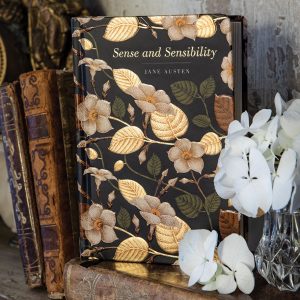 Sense and Sensibility by Jane Austen
Our thoughts turn to Jane Austen’s classic novel Sense and Sensibility—a tale of romance, heartbreak, and the social mores of nineteenth-century England. Follow along as we explore the lives of the Dashwood sisters: practical Elinor, with her respect for the traditions of society, and impetuous Marianne, who leads with her heart, come what may.

First published in 1811, Jane Austen’s beloved novel Sense and Sensibility is a coming-of-age tale centering on sisters Elinor and Marianne Dashwood. Upon their father’s death, the young ladies, along with their mother and little sister, Margaret, are forced to move from their family estate to a small cottage on a distant relative’s property. As readers, we are privy to the enchanting story of these two main characters as they experience both love and heartbreak amid the backdrop of nineteenth-century England. As the eldest daughter, the more practical Elinor represents the “sense” in the title, while Marianne embodies “sensibility,” which, in this era, meant guided by emotions. With which sister’s philosophy do you most identify?
In the early chapters, the Dashwood ladies are still at their estate, now presided over by the spiteful Fanny Dashwood, wife of the late Mr. Dashwood’s son from his first marriage. Though Fanny treats the ladies despicably, her shy brother Edward Ferrars catches Elinor’s eye. Unsure if her affection is reciprocated—and being the sensible one—Elinor holds her feelings close, treating him more as a friend or brother than a love interest. Was there ever a time when you concealed your true feelings about someone? What was the result?
In the first chapter, the proprietor of the Oxford Antique Shop was unpacking a worse-for-wear creche he’d procured in England. Father Tim was immediately captivated by the “motley assortment of sheep” and other shabby pieces spilling from the box. Though he had always lived “the life of the mind” and never really worked with his hands, he decided to refurbish the entire set himself, spurred on solely by picturing Cynthia’s reaction when he presented it to her. In our November/December 2021 issue, readers tell us about handmade surprises discovered—or placed— under their Christmas trees. Have you ever given or received such a gift?
Jane Austen introduces us to the dashing John Willoughby, who scoops up Marianne and carries her home after she sprains her ankle while out on a walk with Margaret. He is quite the charmer and makes an immediate impression on the Dashwood family, thanks to his handsome looks and debonair manners. What are your first impression of him? Does he seem too good to be true?
As we continue reading, Marianne begins spending more and more time with Willoughby, and the two behave in ways her older sister sees as somewhat scandalous. Elinor has reason to believe they are secretly engaged, but perhaps Willoughby is not financially able to support a wife. Why do you think Marianne would keep this from her sister? Have you ever kept a secret from someone you were very close to?
After Willoughby is sent off to London by his cousin Mrs. Smith, Marianne is brokenhearted, crying day and night for her beloved. To lift her spirits, the Dashwood sisters go for a walk, and during this excursion, they spy a man on horseback approaching them. Marianne thinks it is Willoughby, but when it turns out to be Edward Ferrars, she sets aside her own disappointment and chooses to be happy for Elinor. Can you think of a time when you were able to celebrate someone else’s joy despite your own letdown?
Marianne is conversing with Elinor and says, “Sometimes I have kept my feelings to myself because I could find no language to describe them in.” Can you think of a time when you couldn’t find the right words to express your own feelings? What do you do when words fail?
Jane Austen evinces a wicked sense of humor in Sense and Sensibility. The malicious Fanny sneered, “People always live forever when there is an annuity to be paid them.” When Marianne wonders so eloquently about whether the falling leaves had feelings, Elinor deadpans, “It is not every one who has your passion for dead leaves.” What is your favorite humorous quote from this or any of Miss Austen’s novels?
We learn that exaggeration-prone Sir John Middleton satisfies his need for sociability by holding endless parties for young ladies and men at his estate. He fancies himself a consummate matchmaker, though he rarely takes the time to actually know the people he sets up. Have you ever played matchmaker or been set up by a friend? We would love to hear your stories!
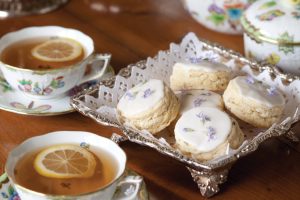 A classic pairing with a warm cup of tea, the scone takes many shapes and can be made with a variety of flavors to suit diverse palates. We have selected a delightful list of recipes for you to share with loved ones when you gather, no matter the season.
The cast of characters in Sense and Sensibility runs the gamut, from sensible Elinor and emotional Marianne to shy Edward and deceitful Willoughby. Who is your favorite of all the characters? Least favorite? With whom do you most identify?
As we close the pages of Sense and Sensibility and bid farewell to the Dashwood sisters, what scene or scenes will you remember the most? Why?
Find Victoria Classics Book Club resources—including discussion questions, companion materials, and a reader forum—at Victorimag.com!