

Over the years of the Victoria Classics Book Club, our group has grown to encompass thousands of members connected by a love of reading. Below, find discussion questions for past volumes, which can be explored further on our Book Selections page. We also invite you to join the ongoing conversation on our Facebook page, where you will meet a delightful coterie of devoted readers.
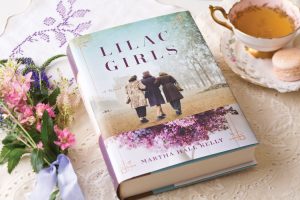
Lilac Girls by Martha Hall Kelly
After discovering the story of New York socialite-turned-philanthropist Caroline Ferriday’s lilac gardens in a May 1999 issue of Victoria magazine, Martha Hall Kelly was inspired to visit the Bellamy-Ferriday house in Bethlehem, Connecticut, to view the famed blooms herself. Upon arriving, her curiosity grew and sparked research of Caroline’s incredible life, eventually leading to her writing our newest selection. Following the lives of three women navigating the terrors of World War II, a beautiful story of friendship and redemption is revealed. Have you read Lilac Girls? Be sure to collect your copy in our shop!

Learn more about the Lilac Girls in this interview with author Martha Hall Kelley.
Martha Hall Kelly’s first introduction to actress Caroline Ferriday came through the article “Caroline’s Incredible Lilacs,” which appeared in a 1999 issue of Victoria. The piece mentioned the thespian’s heart-warming connection to the “Rabbits” of Ravensbrück. Curious why this important story had been lost to time, Martha began extensive research that developed into her first book, Lilac Girls, which became a New York Times best-seller. Can you tell us some of the ways Victoria has inspired you?
In the early chapters of Lilac Girls, we meet the three main characters, who seemingly have nothing in common—former Broadway actress and French Consulate volunteer Caroline Ferriday; young Kasia Kusmerick, a teenager living in Lublin, Poland; and Herta Oberheuser from Germany, the only female doctor at Ravensbrück. Soon, their lives will be indelibly intertwined. Which of these characters’ point of view intrigues you the most? Why?
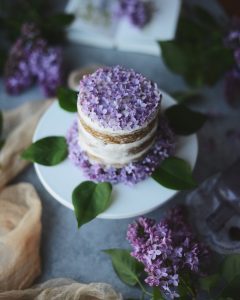 Evoking images of the renowned purple blossoms that appear at the Bellamy-Ferriday House each spring, this Vegan Lilac Lemon Cake from the kitchen of Nantucket chef Kaity Farrell features a whimsical garnish of blossoms atop a deliciously sweet whipped coconut cream frosting.
We learn early on in Lilac Girls that Caroline Ferriday’s philanthropic ways were a family tradition, inherited from her mother who traced her own giving heart to her Woolsey roots. (The Woolsey women nursed soldiers on the Civil War battlefield.) What are some characteristics or traditions that have been passed down through generations in your own family?
In Chapter 5, 16-year-old Kasia relates that she took a quiz in an old copy of Photoplay magazine that said you would “feel a click like the sound of a compact closing” if you were in love—a sound she claimed to hear every time she saw Pietrik. Thinking back to your teenage years, what did you think was a sure sign you were “in love?”
The storyline goes back and forth between Caroline’s privileged world of New York society and the starkly contrasting picture of life in a concentration camp. What emotions do these vastly different experiences foster within you?
it is difficult to understand why Herta, a doctor sworn to “first do no harm,” agreed to participate in the experiments done on the Rabbits. Do you think she could have refused to do so, or do you feel she truly had no choice? What do you think you would have done in her position?
Lilac Girls chronicles a very traumatic time in world history and delves into accounts that are oftentimes difficult to hear. Put yourself in Kasia’s shoes for a moment. Where did she find the fortitude to survive her circumstances? What is your source of strength in times of trouble?
As we read earlier in Lilac Girls, we saw that Herta apparently developed a soft spot for Halina when the Polish prisoner becomes her nursing aide. Halina’s artistic skills further endeared her when she drew a flattering portrait of Herta and later taught her how to dance the foxtrot. Why do you think the doctor denies knowing Halina when Kasia confronts her after the war—especially since she is wearing the woman’s ring?
In the final chapters of Lilac Girls, Kasia and her sister and fellow Rabbit, Zuzanna, arrive in New York for their operations. Kasia panics and bolts from the hospital before her procedure, remembering a previous surgery and recovery. When Caroline and Zuzanna find her, Zuzanna assures her younger sister this time will be different, saying, “I’ll walk you there. Keep an eye on things. I’ll scrub in if they let me.” Is there someone who you can always count on to be there for you in difficult times?
Once World War II is over, Caroline returns to New York and her philanthropic endeavors. Forever changed by the victim she met at her mother’s apartment in Paris, she forms the Ravensbrück Rabbits Committee. She dedicates herself to bringing attention to the Rabbits’ plight and to raising funds for the women’s medical treatment, which included surgeries in the United States. Please tell us about a cause that you are passionate about and what drives that passion.
After Kasia and Zuzanna’s surgeries in Lilac Girls, they stay for a time at Caroline’s home in Connecticut, nicknamed The Hay. The beautiful garden is in full bloom, with tulips, bluebells, roses, and especially, “a sea of purple lilacs,” which capture Kasia’s attention. Caroline tells her, “Father loved the fact that a lilac only blooms after a harsh winter.” Which character or characters in the book do you think “bloomed” the most after undergoing such dramatic hardship? Which character was your favorite and why?
As we close this chapter of the Victoria Classics Book Club, what moments from the book will stay with you long after reading the last page?
Find Victoria Classics Book Club resources—including discussion questions, companion materials, and a reader forum—at Victorimag.com!