Landscape and geography hold our memories. And sometimes, I’ve discovered, a place holds memories of others’ hearts and minds that are only revealed to us when we step foot on its grounds. It happened to me at The Kilns, C. S. Lewis’s home in Headington, Oxford, England.
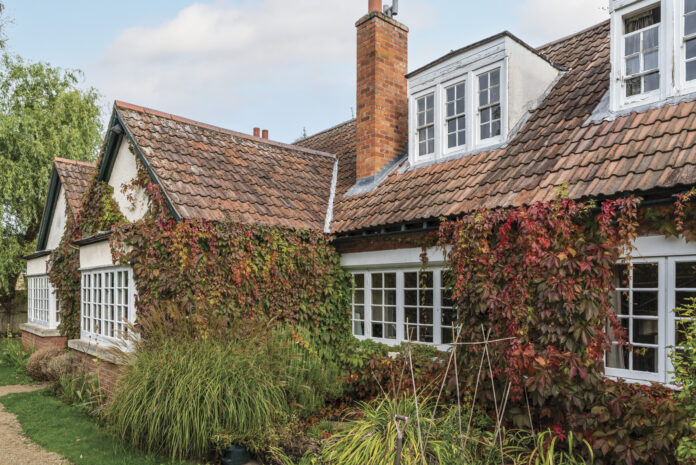
For thirty-three years, C. S. Lewis—called Jack by his friends and family—lived in The Kilns, a brick-and-stone house in the Oxfordshire countryside. It was here that he wrote his most famous works; where he lived first with his brother Warren (“Warnie”); where children of World War II’s Operation Pied Piper resided with him and inspired his Narnia series; and where, in the end, he settled with his wife, Joy Davidman.
For years, I had read about C. S. Lewis’s rambling twelve-room home, one of the most famous houses in Oxford and a pilgrimage site for the many people who love his work and are curious about his life.
I was more than curious. At the time, I was writing a novel about his wife, and I wanted to know more about the abode she loved. In her letters, she writes of the house and its acreage with the reverence of someone who understands that geography is more than just location. For Joy, an American poet and mother of two young boys, this dwelling was where, after years of searching, she finally found “home” for herself and her two sons. In this house, she fell in love and lived with Jack as his wife for the last years of her life.
For my novel, I’d researched the area, written about the cottage, and imagined these environs so many times that I was quite afraid that when I entered The Kilns’s gardens and passed through its door in the real world, I’d be disappointed.
I flew to London in March and took the train to Oxford. This research was vital to my telling of the unlikely love story of Joy and Jack. I’d saved his house for last.
I’d already toured London, Oxford, and Magdalen College. I’d imbibed a pint at The Eagle and Child, the pub where the literary group known as the Inklings had met. I’d strolled the streets of Oxford and climbed the Magdalen Tower. I’d walked Addison’s Walk, a trail along the river behind the college where Lewis taught. With my husband, I punted on the River Cherwell.
It’s no small thing to say I fell in love with Oxford while it cast a spell of enchantment upon me—which persists to this day, ten years later.
We arrived at The Kilns during a chilly March. Its green front door was just as I’d written about and imagined. I walked through it with the giddy feeling of something imaginary coming to life, as if I walked through my own Narnia wardrobe door.
A narrow hallway of dark wood and gleaming floors met me as I entered. To the left sat the common room, filled with bookshelves. A fireplace dominated the far wall, and the furniture, true to the time, appeared comfortable enough to plop down and relax while reading. It was as if Joy and Jack might enter the room any minute and offer me tea. As I had written of them falling in love, reading, playing Scrabble, and having tea, I’d stood in this spot for hours, but only in my imagination.
Down the hall and to the right was a cozy kitchen anchored by an AGA stove. A window above the sink overlooked the backyard’s now dormant garden, and yet as I stood there, I saw a garden alive and flowering, as Joy had described in her letters. Off the kitchen was a small guest room where her sons had slept.
“This blessed plot, this earth, this realm, this England.”
—William Shakespeare
I made my way up narrow stairs to the second floor. The room on the left was Jack’s office, and to the right was a guest bedroom. So where was Jack’s bedroom? It was behind the office, accessible only by walking past his desk and into the next room. It is said that when Joy stayed at The Kilns before they were married, she had slept in the room across the hall. Because of this, when Jack needed to use the downstairs bathroom, he exited his window and went down the fire escape stairs to enter the house from the outside rather than disturbing his guest.
After entering Jack’s office, I stood for a long while, overcome with an emotion that I still have trouble naming—something close to awe, possibly enchantment. This is where C. S. Lewis wrote when he wasn’t in his rooms at Magdalen College. Here, he answered the hundreds of letters he received. It’s where he read. It’s where Narnia came to life. His desk faced the window with a view to the gardens, and I could nearly feel his presence and smell the tobacco of his pipe. This house was alive with memories of the days and years of its residents’ extraordinary lives.
As I wandered its rooms, I wondered what Joy would think of the house being toured by strangers, of people moving through the house and hearing the tour guide tell tales of her husband’s life (some I discovered later that weren’t exactly true).
Becoming Mrs. Lewis, the novel I was researching that day, was released in 2018. Years later, I was speaking at a C. S. Lewis conference in Oxford, and I returned to The Kilns, not for research this time but merely for the charm of it.
Again, I passed through the green door. Again, down the hall to turn left into the common room. And this time, there on the coffee table, sat my novel about Joy and Jack’s love story. My eyes filled with tears. Utter happiness overcame me, a feeling that had little to do with me but was for Joy.
I arrived as always to the truth: Landscape holds memories for all of us, and certain places can bring us back to ourselves and a feeling of home.
Standing in the common room of The Kilns, I felt as I often did when writing about Joy: that she was with me and that she was thrilled to return to the house that overflowed with cherished memories. This novel, the first narrating her life in fiction, had done more than chronicle her struggles, redemption, life, and love; it had brought Joy back to The Kilns, to the house where she’d been loved and adored, the place she had called home.
Text Patti Callahan Henry
Discover more essays from our 2026 Writer-in-Residence Patti Callahan Henry with a Victoria magazine subscription.