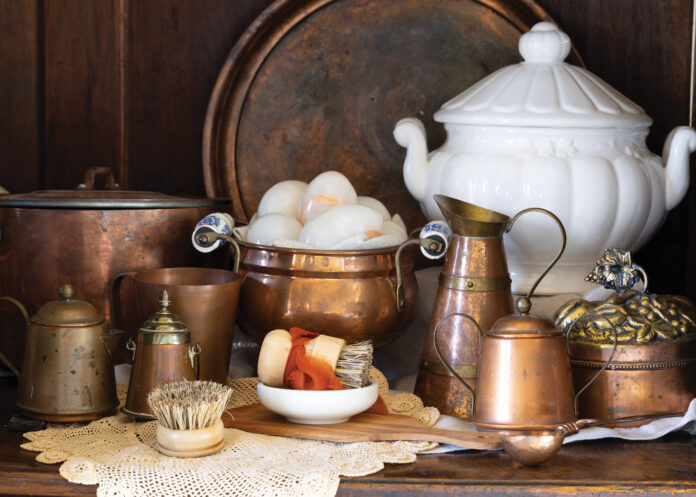
Whether bearing a time-kissed finish or burnished and shining, the unmistakable sheen of copper adds an elegant appeal to the kitchen. In an effort to demystify this practical cookware, we offer advice for maintaining its luster through the years.
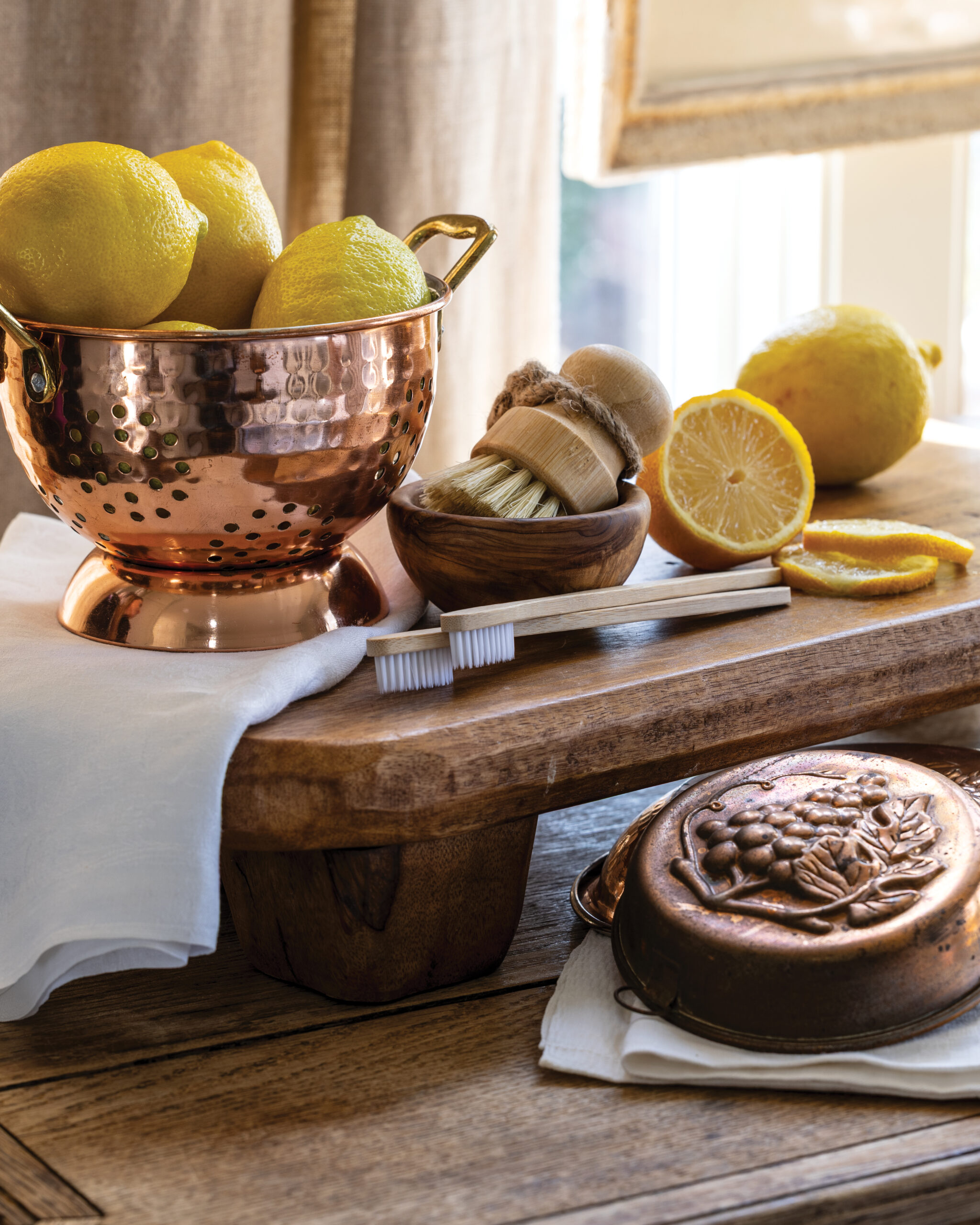
Tarnish is a result of oxidation: a chemical reaction between the metal and its environment. With copper, the resulting patina is initially reddish-brown but over time can become greenish-blue. If your item has developed an unwanted patina, natural methods may be suitable for restoring its shine. Try using one of the following methods (after testing on a small, inconspicuous area first):
The Vinegar Method
- Mix one cup each of white vinegar and water in a small bowl with 1 tablespoon of salt.
- Dip a clean microfiber cloth into the solution.
- Use the saturated (but not dripping) cloth to gently buff any tarnished areas of the copper.
- Rinse with water to remove any vinegar and salt residue.
- Dry thoroughly with a clean microfiber cloth.
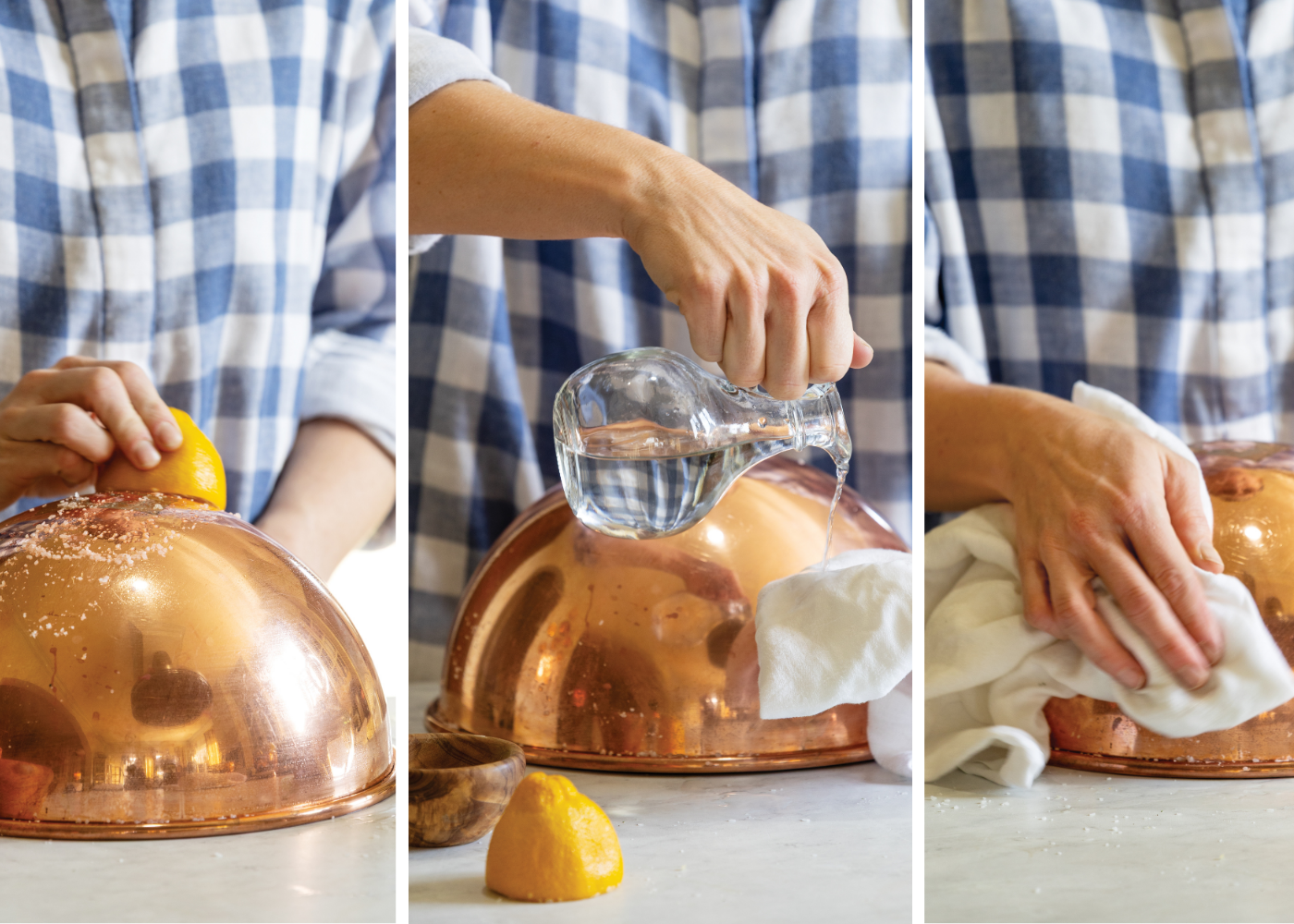
The Lemon and Salt Method
- Cut a fresh lemon in half, removing any seeds.
- Sprinkle a generous amount of salt onto half the lemon.
- Gently rub the salted lemon to gently buff any tarnished areas of the copper.
- Repeat with the remaining lemon, if needed.
- Rinse with water to remove any lemon juice and salt residue.
- Dry thoroughly with a clean microfiber cloth.
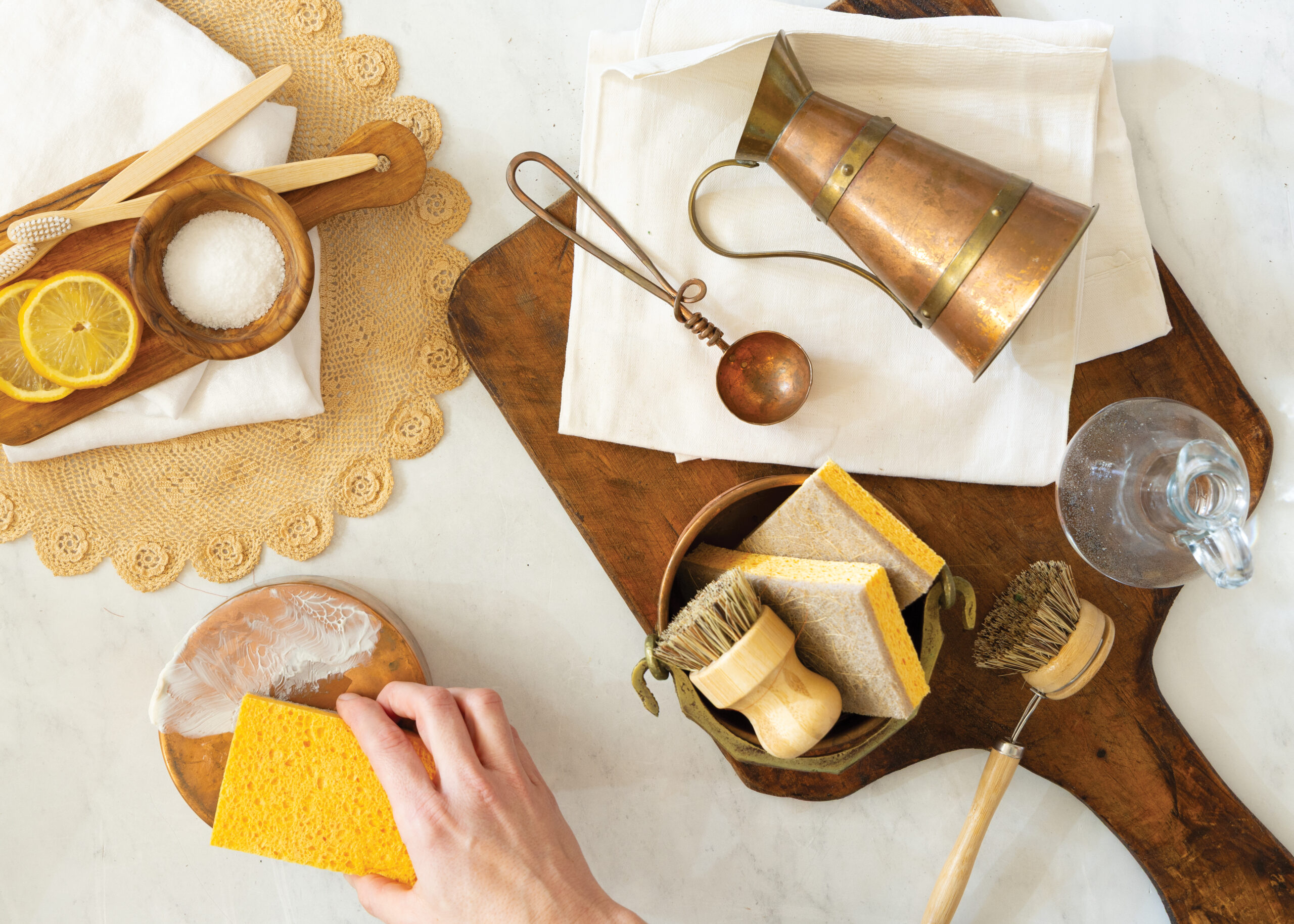
The Tomato Method
- Cover the surface of the copper item with ketchup.
- Use a microfiber cloth to gently buff any tarnished areas of the copper.
- Rinse with water to remove any ketchup.
- Dry thoroughly with a clean microfiber cloth.
Note: Though ketchup is most commonly used for this method, other tomato products contain similar acidity and should work also: tomato paste, tomato sauce, tomato soup, etc.
The Natural Paste Method
- Mix equal parts salt and flour in a bowl.
- Slowly stir in either vinegar or lemon juice until a thick, smooth paste is formed.
- Apply the paste to the heavily tarnished areas of the copper.
- Let the paste sit for roughly 30-60 minutes.
- Using a soft-bristled brush, scrub the tarnished areas with the paste.
- Rinse with water to remove all paste residue.
- Dry thoroughly with a clean microfiber cloth.
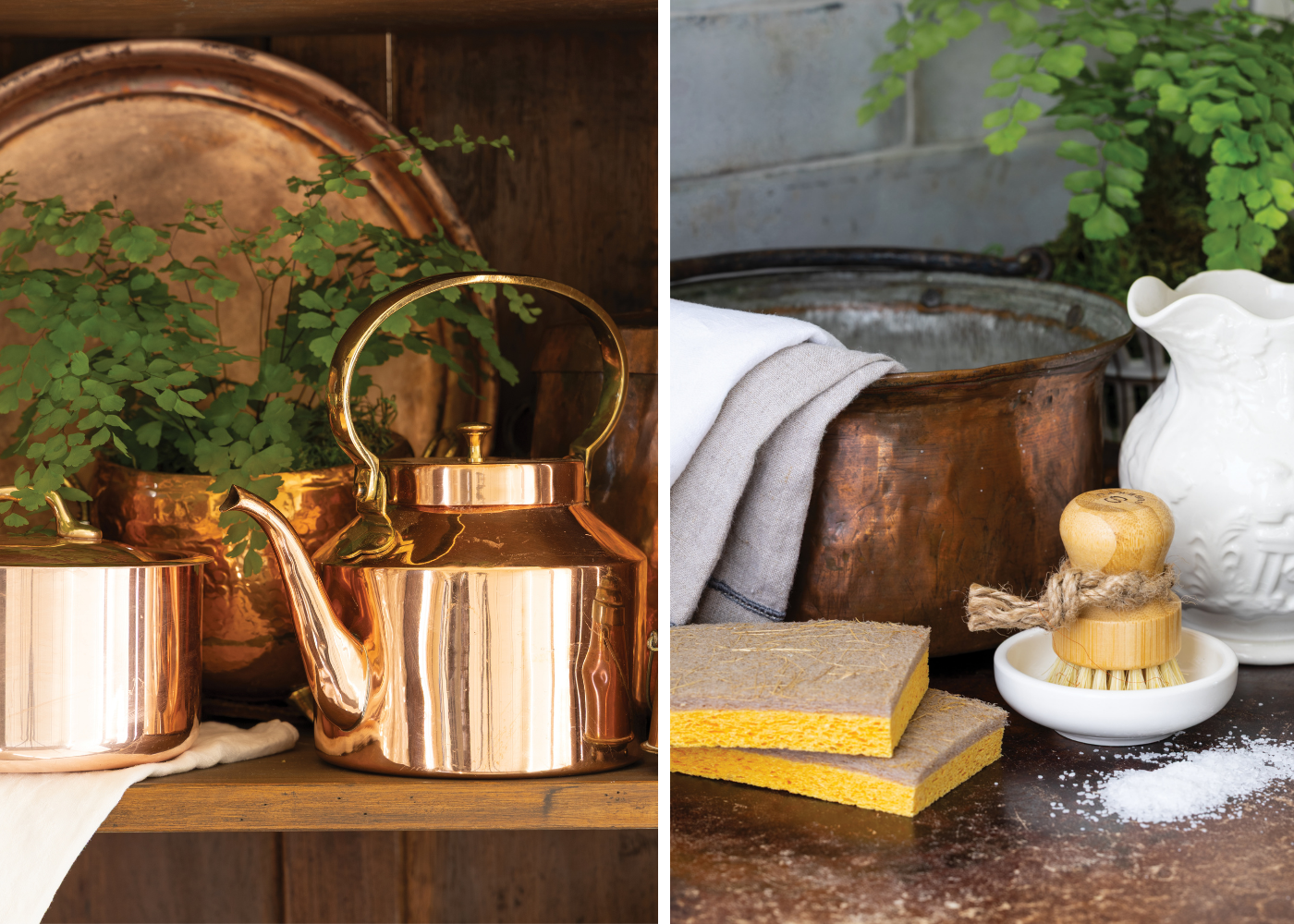
Other Tips
- Avoid using abrasive materials or cloths when cleaning and polishing, as these could damage the copper’s finish.
- Water accelerates the oxidation process. Don’t leave copper soaking in liquids or let it air dry—wipe it down with a clean, dry, soft towel.
- If cooking with copper, keep an eye on the tin lining. Once copper starts to show through on the interior surface that comes into contact with food, consider having your item re-tinned.
- When cleaning antique copper, extra caution should be taken to protect its surface, as some finishes are more delicate. Always test your cleaning method on a small, inconspicuous surface before proceeding.
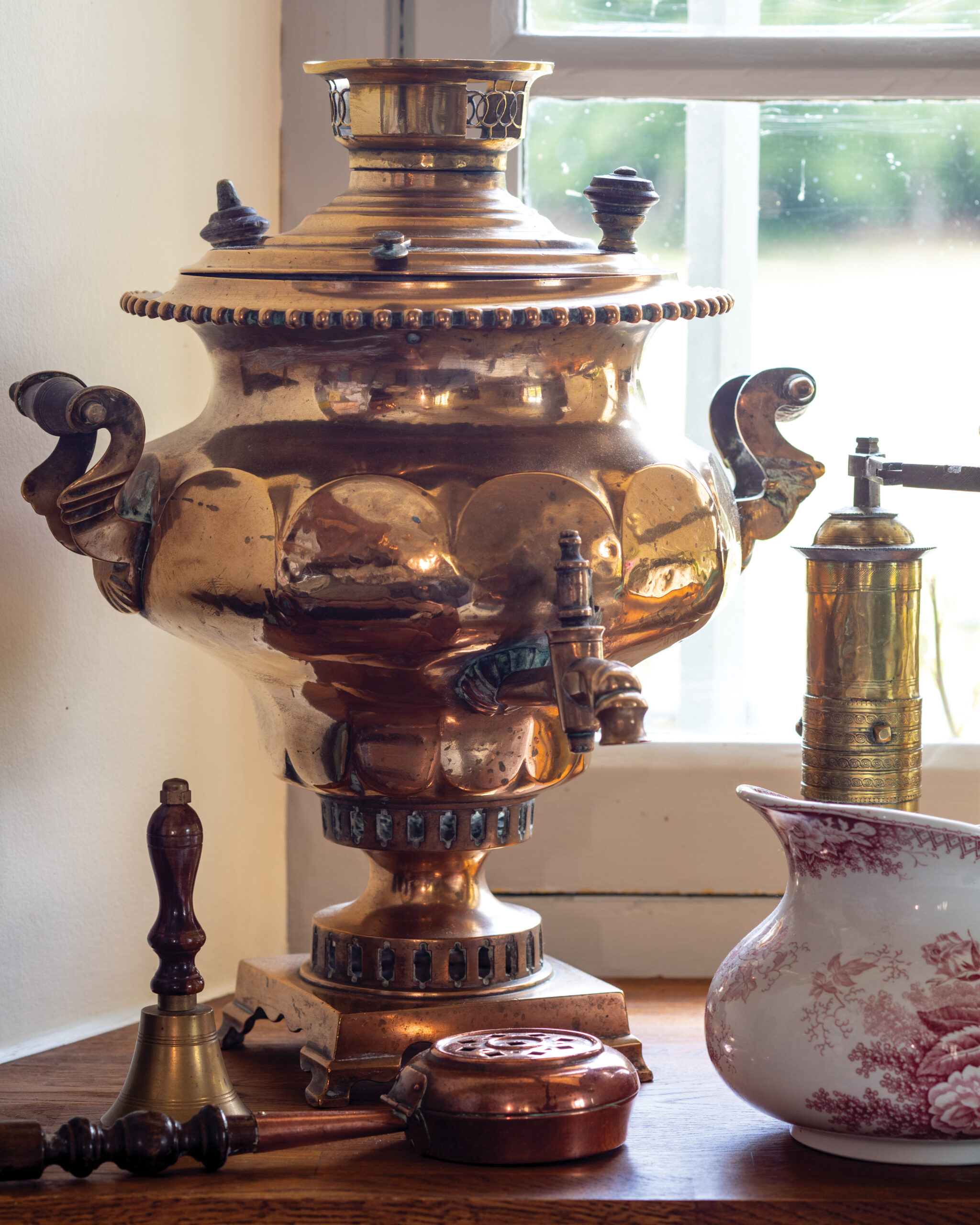
Though many may want to use these varied methods to polish their collection, there are some who find one of copper’s most charming qualities to be its tendency to tarnish—developing a rich patina over time. If desired, one can happily embrace this natural aging process as a mark of character and history.
Text Leslie Bennett Smith
Photography Stephanie Welbourne Steele
Styling Maghan Armstrong
To learn more about copper collectibles, see “An Autumnal Patina” in the September/October 2025 issue, available on newsstands and at victoriamag.com.